Discover The Latest Blogs
Stay updated with Our Informative Blog Posts
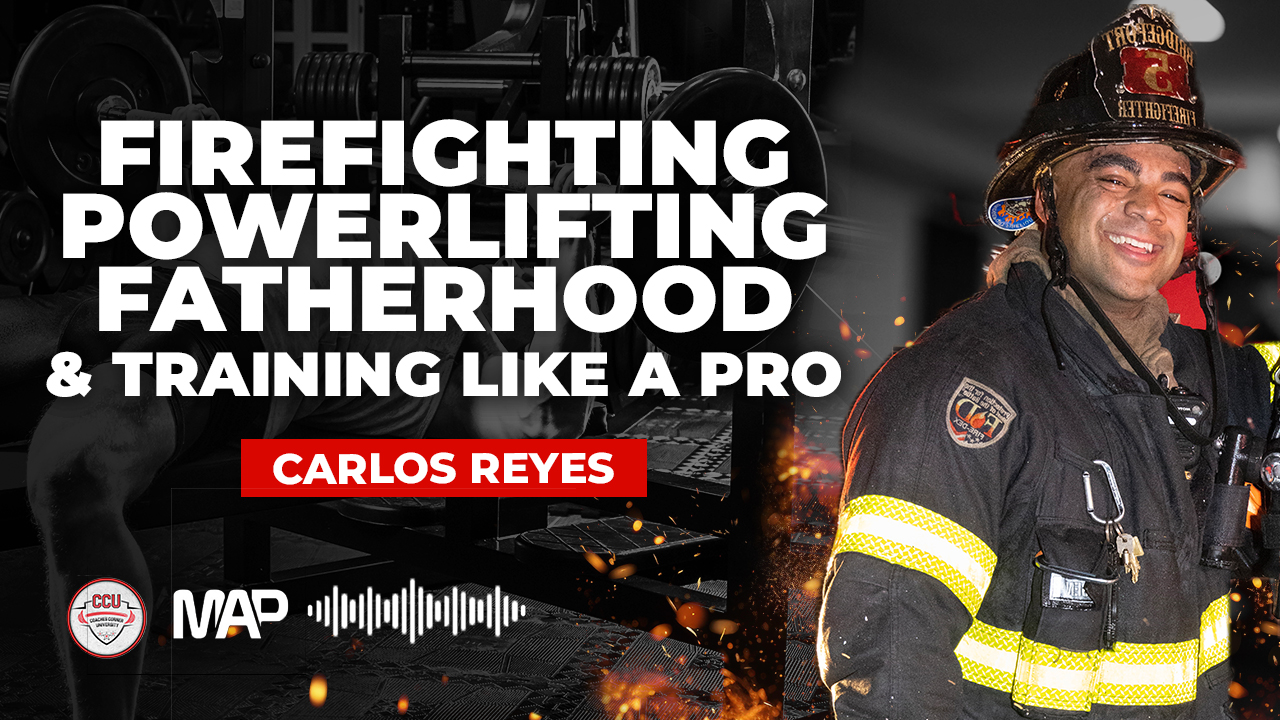
CCU Podcast - Firefighting, Powerlifting, Fatherhood and Training Like a Pro with Carlos Reyes
Firefighting, Powerlifting, Fatherhood and Training Like a Pro
Podcast
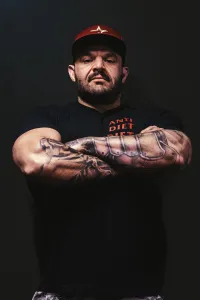
Today I sat down with Carlos Reyes, who is a 3x Amateur Strongman National Champion, 1x Strongman National record holder (log press), 2101 total @ 242 raw, 6 2000+ totals, Lieutenant / Incident Safety Officer for the Bridgeport Fire Department (CT), Lead PT Instructor and Training Officer for the Bridgeport Regional Fire Academy since inception, Father to 1 son.
We've been friends since 2014—twelve years of watching each other navigate this industry, make mistakes, learn lessons, and evolve. Carlos competed at the highest levels in both strongman and powerlifting, hitting a near-2100 total while working as a firefighter and building a family. But what makes this conversation valuable isn't his numbers. It's that Carlos made a choice that most coaches never make: he looked at the whole client load, the financial incentive, and the opportunity to scale—and he said no. Not because he couldn't do it, but because he knew he couldn't do it right.
This conversation covers everything from the ethics of coaching capacity to the role conditioning plays in longevity, from understanding trade-offs to recognizing when your identity needs to shift. Carlos walked away from competitive powerlifting at his peak, transitioned into training firefighter recruits, and found more fulfillment than he ever had on the platform. These are the lessons that took him 18 years to learn.
10 Key Takeaways from Firefighting, Powerlifting, Fatherhood and Training Like a Pro
There's a Moral Component to Knowing Your Limits
Carlos has coached five clients max for the past year and a half. Not because he can't handle more, but because he knows what it takes to do it right. "You have to be a psychologist," he said. "That's probably 50% of what you do." He recognizes that taking on more clients means either compromising the quality or sacrificing his capacity to show up fully in his career and family. The financial incentive exists, but the ethical line is clearer.
The Best Athletes Aren't Always the Best Coaches
Carlos has been one of the most intellectual lifters I've known—someone who deeply understands programming, methodology, and the training process. But he'll be the first to tell you that being good at the sport doesn't make you good at coaching it. "During my competitive career, it was tough to think about focusing on myself and my career outside of strength sports and then giving my all to 25 people," he explained. The bandwidth required to coach well differs from the bandwidth needed to compete well.
Patience Isn't Optional—It's the Foundation
When Carlos started working with firefighter recruits, he had to develop patience in ways he never needed as a competitive athlete. Watching someone perform a movement that's "kind of a mess" and saying "good enough, keep going" requires an entirely different mindset than training yourself or coaching elite athletes. If you don't have patience for people who aren't as driven as you, coaching will burn you out fast.
Life Phases Demand Different Approaches
Carlos was a robot before he had a kid—grilled chicken and brown rice five times a day, structured training, complete control. After his son was born, everything changed. He started microdosing training sessions throughout the day, squatting in the morning, benching two hours later, and doing cardio in the evening. His metrics stayed at 95% of their previous level, even though the structure looked chaotic on paper. The lesson: you don't need perfection to be productive.
Understanding Trade-Offs Is Everything
"There are no good or bad decisions," Carlos and I discussed. "There's just a deep understanding of trade-offs or a poor understanding of trade-offs." If you're going to sacrifice sleep to get your work done, you're accepting that recovery might take a hit—but your stress might come down, which could offset the shitty sleep. You have to see all the variables and make the call. Then execute and evaluate the data afterward.
"Just Go Train" Solves Most Problems
Carlos found that his best training sessions often came after working two straight days, sleeping a total of four hours, and hitting the gym anyway. Meanwhile, sessions after three days off with perfect nutrition and eight hours of sleep would be garbage. "You don't know until you actually put the weight on the bar," he said. For first responders, parents, or anyone in a manual labour career, your baseline is feeling like shit. So, unless it's catastrophic, go train.
Conditioning Is Non-Negotiable for Longevity
Carlos didn't prioritize cardio until 2016 when he realized he was working way too hard at routine firefighting tasks. He started walking for three to four hours a day and noticed his joints stopped hurting, his sleep improved, and his recovery improved. "Recovery is aerobically based," he explained. "If you're doing nothing for your cardio at all, you're not doing everything you can to recover, period." He's convinced this was one of the most significant contributors to making it through 18 years without surgery.
Assistance Work and Isometrics Preserve You
Carlos never got lazy about assistance work, and he always trained it like a bodybuilder—full range of motion, big stretch, slow eccentrics, long pauses. "I'm trying to make this as hard as possible, so I don't have to lift as much weight," he joked. "I just squatted 700 pounds. I don't want to load up 14 plates on a leg press." He also leveraged isometrics heavily in rehab settings and with firefighter recruits, recognizing that static strength matters and that ISOs load tendons in ways that prevent injury.
Diet Creates or Reduces Inflammation
Carlos eats 1,000 grams of fruits and vegetables every day. "If there's not a fruit or vegetable on the plate, it's not a meal," he said. He believes that if you're creating an inherently inflammatory environment with training stress and PEDs, and you're taking shortcuts with your diet or ignoring micros, you can't say that doesn't correlate with injury. He hasn't tracked calories in over 10 years, but he weighs all his food and makes minor adjustments based on how his body weight trends.
Identity Beyond Outcomes Is Robust
Carlos knew the writing was on the wall for his powerlifting career five years before he actually retired. He had red lines around body weight, PED use, and family commitments that he wouldn't cross. When he finally walked away after his last meet in July, the transition was seamless. "I did the thing, and it's time to move on," he said. He's pouring everything he learned from powerlifting into training firefighter recruits and being a father. The lessons transferred. The obsession transferred. The identity didn't need to.
The hardest part about this conversation was recognizing how rare it is. Carlos made decisions most coaches never make because they require saying no to money, no to ego, and no to the identity you've built. He walked away from competitive powerlifting at his peak, not because he couldn't continue, but because he wasn't willing to accept the risk anymore. He chose to coach five clients instead of 25 because he knew what it takes to do it right. And he's found more fulfillment in training firefighter recruits and being present for his son than he ever did chasing totals.
The coaches who make it 20 years aren't the ones who said yes to everything. They're the ones who knew when to say no.
Find Carlos
IG - @creyes242
Find the Podcast
Coaches Corner PhD
Get 1-on-1 mentorship with one of the best coaches in the industry!