
Discover The Latest Blogs
Stay updated with Our Informative Blog Posts
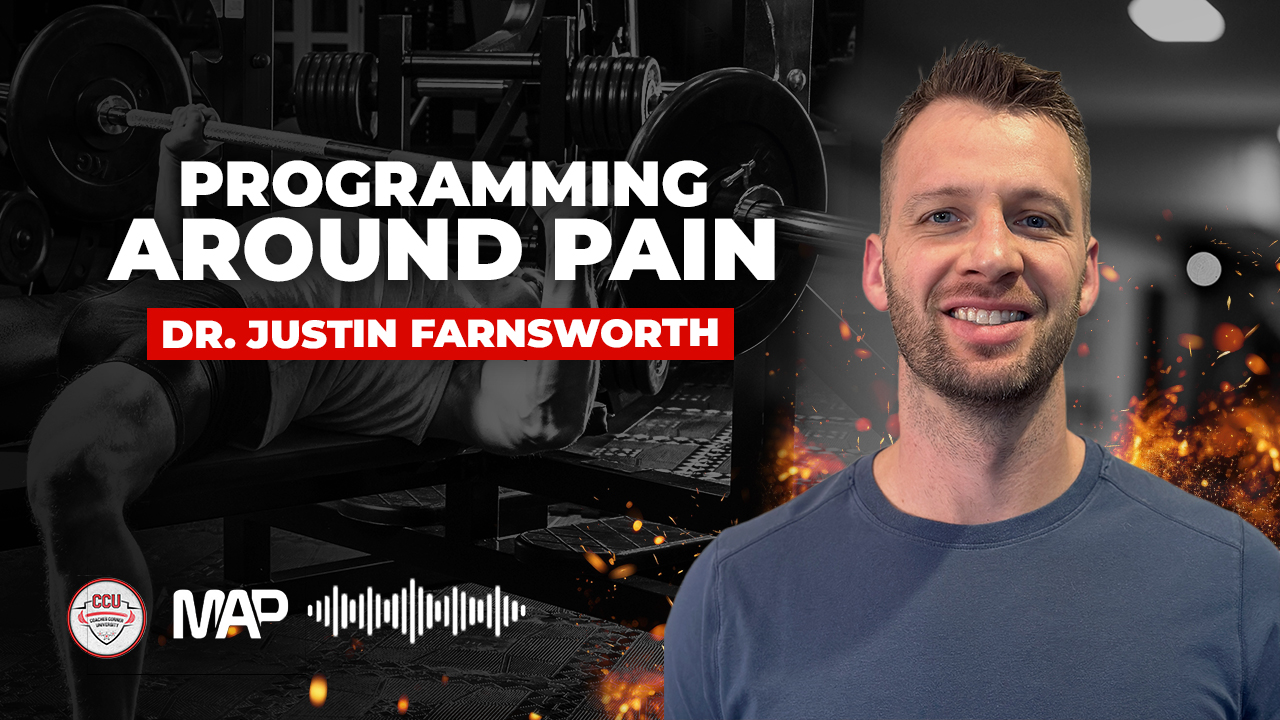
CCU Podcast - Programming Around Pain Podcast with Dr. Justin Farnsworth
Programming Around Pain
Podcast with Dr. Justin Farnsworth
Today I got to sit down with Dr.Justin Farnsworth, CEO of Re: Built Strength. Justin is a Doctor of Physical Therapy and Board Certified Sports Clinical Specialist with over a decade in medicine and over 20 years as a coach in high-performance and general fitness.
He has led over 100 in-person certification courses since 2020 and has been on all sides of the training-to-rehab spectrum as a coach, professional athlete, and clinician. He believes that good training and good rehab are one and the same, and aims to empower both coaches and clinicians with practical knowledge that is evidence-based, actionable, and adaptable to real-world client needs.
He currently manages his own training and education business that helps both coaches and clients “bridge the gap” between rehab and performance while helping them understand how to use exercise as medicine.
Pain is one of the most misunderstood, mishandled topics in this industry. We treat it like a stop sign when it should be a roadmap. We pile on corrective exercise when the tissue needs load. We refer out the second a client says their knee hurts, instead of just changing the exercise. This conversation cuts through all of that. Dr. Justin Farnsworth and I get into what pain actually is, why most of what coaches do around it misses the mark, and the simple frameworks that let you keep clients training instead of shutting them down.
Key Quote
"Weak things don't fucking break." - Justin Farnsworth
5 Core Themes
Pain is normal, not a verdict. It's the body's request for change, not proof that something is broken.
Most corrective exercise is neither corrective nor exercise. Load is what changes tissue. The best corrective exercise for the squat is the squat itself, scaled to the person.
The green/yellow/red light system. Pain at 4/10 and below before, during, and after is a green light to keep training. Yellow means change the exercise. Red flags get a phone call.
Asymmetries are joint-specific, not universal. Range of motion can vary from side to side. Strength generally shouldn't.
Isometrics are an underused weapon. They provide an analgesic effect, build tendon resilience, transfer to power output, and let you train hard when other modalities can't.
Main Take-Home Message
You don't need a doctorate to coach people in pain. You need a framework, the willingness to change the exercise, and a referral network for the rare cases that need one. Build resilient humans through load; don't protect them through restriction. Pain is information, not a stop sign. And if your coaching shuts the whole system down every time something hurts, you're creating the very fragility you're trying to prevent.
This one will change how you program for anyone who walks in your door with pain. Which, eventually, is everyone.
Find Justin
Website -https://www.drjustinfarnsworth.com/
Instagram - @drjustinfarnsworth
Find the Podcast
Coaches Corner PhD
Get 1-on-1 mentorship with one of the best coaches in the industry!