
Discover The Latest Blogs
Stay updated with Our Informative Blog Posts
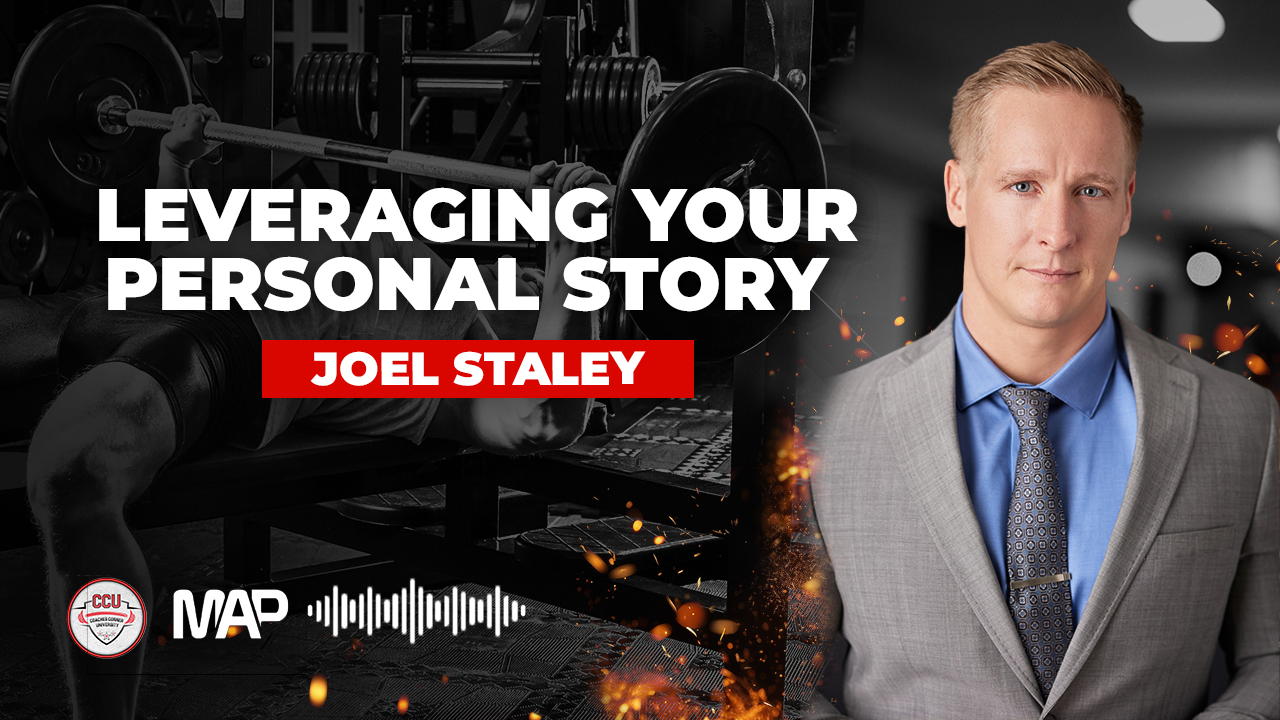
CCU Podcast - Leveraging Your Personal Story Podcast with Joel Staley
Leveraging Your Personal Story
Podcast with Joel Staley
Today I sat down with Joel Staley, Owner of Total Reset Coaching. He helps business owners, executives, and leaders uncover hidden gaps in their energy, focus, and performance so they can lead their teams, families, and lives at the highest level.
Joel is a pro-physique competitor, author, podcaster, and business owner, and has personally faced challenges that would test anyone’s energy and focus, including surviving late-stage cancer, while still raising a family and running a successful business.
I connected with Joel Staley through social media, and within the first five minutes of our conversation, I knew this was going to be one of those episodes that hit differently. Joel built Total Reset Coaching from nothing, scaling to a thriving online fitness business working with high-achieving men. Then cancer showed up. The kind that spreads. The kind that puts you in a chair for 25 hours a week, getting pumped full of poison. And somehow, through it all, Joel kept his business running, his community intact, and his identity as more than "the cancer guy." This conversation isn't about fitness programming or macros. It's about what happens when the thing you've built gets stress-tested by the worst circumstances imaginable, and the decisions you make when you're staring down your own mortality.
10 Key Takeaways from Leveraging Your Personal Story
Joel quit his corporate job with 10 clients paying $97 per month and a newborn daughter starting daycare.
Most people would call that reckless. Joel calls it necessary. He had this "delusional belief" that things would work out, which he describes as both his superpower and his cross to bear. By the time he realized how hard it would actually be, he was too committed to turn back. That delusional optimism led him to spend $5,800 of his $7,000 in savings on a business coach the day after quitting. He got closed hard on that sales call, and he's grateful for it. That investment became the first domino in a series of commitments that transformed his side hustle into a real business. COVID hit a few weeks later, gyms shut down, stimulus checks started flowing, and Joel's business exploded. But the lesson isn't about timing or luck. It's about burning the boats before you know how to swim.
The commitment factor matters more than the programming.
Joel learned this the hard way through getting closed off to himself, and now he builds his entire 90-day program around that principle. The most important moment in his client's journey isn't the workout plan or the meal protocol. It's that sales call where someone finally says, "I'm done putting this off" and swipes their credit card. After that moment of commitment, Joel could tell them to eat chicken breast for 12 weeks, and they'd probably still get results because they've committed to themselves. The information has never been the bottleneck. YouTube exists. ChatGPT exists. What people need is that catalyst moment where they draw a line in the sand and say, "I'm starting now, I don't care what happens." Everything else is just showing them how to fly once they've made that decision.
Building systems beats trading time for money, but most coaches don't learn this until they break.
Joel built his business model around 90-day transformations for high-achieving men with demanding careers and families. He focuses on intermittent and prolonged fasting, progressive overload, and frequency because his demographic can't handle the six-meals-a-day, two-a-day training they did in their twenties. The framework works because it's designed for less time investment, not more. After 90 days, the top 10-20% get invited into the Winner's Circle, a community of guys who just do "gangster shit" together month after month. Joel keeps that group tight, around 20 guys, because he's protective of the community he's built. He's not interested in scaling Winner's Circle. He's interested in protecting what makes it special. That kind of boundary-setting comes from learning the difference between growth and dilution.
When cancer showed up, Joel's first instinct was to hide it.
For six months, he dealt with migratory nerve pain that moved from his lower back to his shoulders to his ribs to his nutsack. He tried everything except going to the doctor. Chiropractors, physical therapists, cryotherapy, oxygen chambers, Reiki healers, the whole spectrum. He thought it was nicotine withdrawal. He thought maybe demons entered him in Sedona. Meanwhile, he was training for a 100-mile ultramarathon and lifting every day, mentally needing the gym even as his body was shutting down. The worst part wasn't the pain. It was the isolation of suffering alone while maintaining the identity of a health and fitness coach. When your brand is built on strength and health, admitting weakness feels like fraud. Joel carried that burden silently because he didn't want to be seen as the guy who couldn't handle his own life.
The diagnosis brought relief and terror in equal measure.
After his face went numb and his neighbour drove him to the hospital, Joel spent five days getting tested for everything. Blood clot in the brain. Growths on his head. Initially, they thought it was an autoimmune disease or a bacterial infection from the Sedona trip. Then they said cancer, probably not, though. Day five, they confirmed testicular cancer that had spread throughout his body. The silver lining? It wasn't his fault. If he'd died from fatty liver disease or heart disease from being overweight and unhealthy, he would have felt like he let his family down. He could look his wife and three daughters in the eye and know he'd done everything within his capability to stick around as long as possible. That perspective became the emotional anchor he uses on sales calls when guys are drowning in fear-based objections to committing to change.
Joel refused to become "the cancer guy."
When his wife urged him to post updates to encourage donations to his GoFundMe, Joel pushed back. He wasn't interested in building his brand around being a cancer survivor. He thinks about Lance Armstrong - everyone knows he had testicular cancer, but it's just one piece of his story, not his entire identity. When a business coach suggested Joel should niche down and only work with cancer patients, Joel's response was immediate: "I have no interest in being surrounded by sick, dying, cancer-laden people and hammering them for thousands of dollars worth of coaching as they're in the worst predicament of their life." The thin line he wants to walk is using the story as an emotional catalyst when someone needs perspective, but not letting it become his legacy. He wants it to be a chapter, not the book.
AI fatigue is real, and the need for community will only intensify.
Joel believes we're in a recession of connection. Everyone can see everyone else's highlight reel. Everyone has moved to remote work. AI is making information even more abundant and less valuable. Joel noticed this when a guy who'd been in his Winner's Circle for four years cancelled, and the cancellation text was clearly run through ChatGPT first. You could tell by the formatting and the tone. It sounded nothing like the actual person. As AI gets more prevalent, the need to be around real people in a real community will increase. That's why Joel's Winner's Circle isn't a course or a program. It's a group of guys who meet up twice a year to go off-roading in Sedona or do cold plunges at 4:30 in the morning. Information isn't the product. Connection is.
The Winner's Circle exists because Joel needs it as much as his clients do.
He has three daughters and a wife. That's a lot of estrogen and emotion in the house. Winner's Circle is how he offsets it: his guys go do guy stuff together. They run crazy challenges month after month. They do hard things on purpose. The plus-minus-equals principle works perfectly in his evergreen model: new guys come in, see people ahead of them to chase, people equal to them for healthy competition, and eventually become the people behind them, showing newer guys what's possible. Joel could scale it bigger, but he doesn't want to. These are guys he's been running with for years. When the right guy comes along, he'll probably get an invitation, but Winner's Circle is Joel's baby, and he wants to protect it. Not every part of the business needs to scale.
Joel determined not to lose any weight during chemo, and he didn't.
While going through 25 hours of chemotherapy every third week for three months, Joel's driving force was that when he showed up in Vegas to meet his buddies, he wanted them to ask, "How did you get in better shape? You literally just went through three months of chemo." That kind of stubborn commitment to controlling what he could control is the same energy that led him to quit his corporate job with 10 clients. It's the delusional belief that becomes a self-fulfilling prophecy. He's now in remission, cancer-free on his PET scan, and he still has both testicles because he pushed back on the surgery when the doctor couldn't give him a better pitch than "it's kind of a safety precaution." Joel says keeping both his nuts is his big win of the year, and honestly, that's the most Joel Staley thing I've heard.
Always leave them wanting more.
Joel runs 90-day programs instead of month-to-month because he doesn't want to overstay his welcome. He's really good for a short amount of time. The goal is to get guys set up with a plan, teach them how to build their own workouts, help them figure out their fasting protocol, address whatever subconscious scripts are running below the surface keeping them stuck, and then teach them to fly. He doesn't want to work with people long-term if he ran out of good advice two months ago. This approach came from doing client interviews post-90-days and discovering that when he had accountability coaches, some people felt like they got the bait and switch - they thought they were working with Joel but got pawned off to someone else. Now he keeps his 90-day cohort to 30-40 guys max, handles it all himself, and actually gets to do the coaching work that made him start this business in the first place.
Joel's story is a reminder that the business you build needs to survive the worst version of your life, not just the best.
Find Joel
Website -totalresetcoaching.com
IG - @joelstaleyfitness
Find the Podcast

Coaches Corner PhD
Get 1-on-1 mentorship with one of the best coaches in the industry!