Discover The Latest Blogs
Stay updated with Our Informative Blog Posts
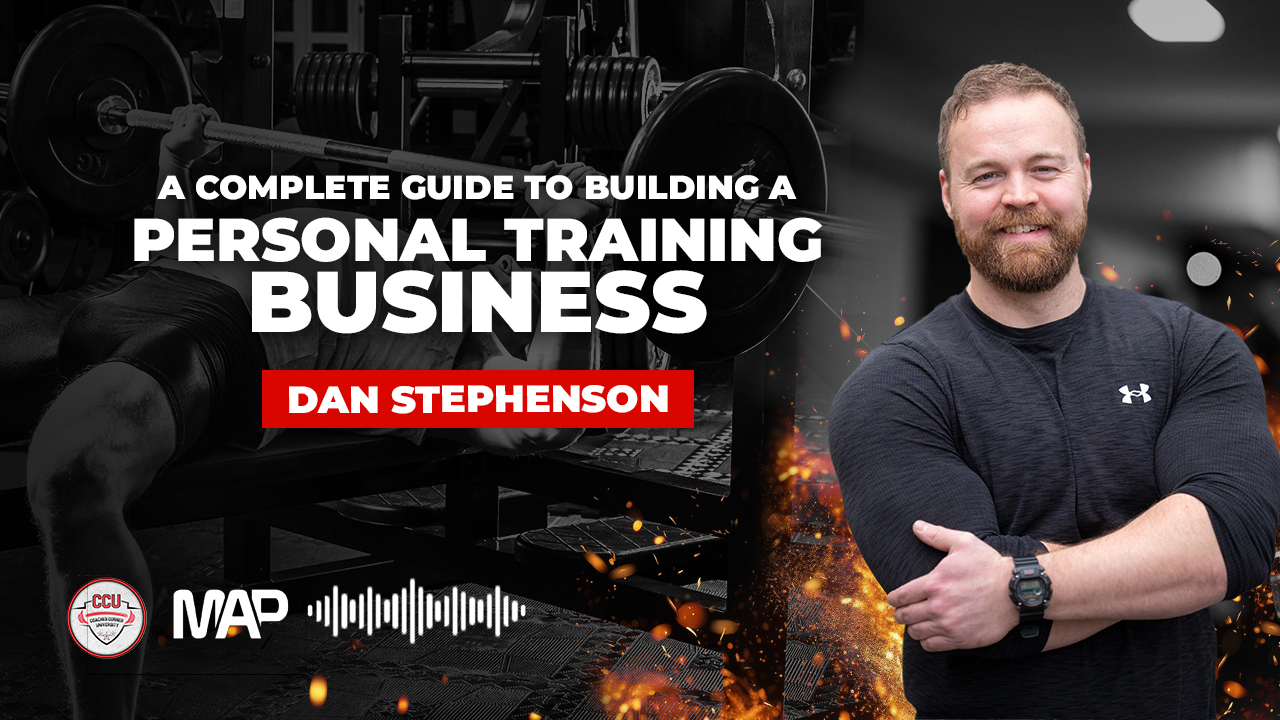
CCU Podcast - A Complete Guide to Building a Personal Training Business with Dan Stephenson
A Complete Guide to Building a Personal Training Business
Podcast
This week, I sat down with Dan Stehenson, who is a strength coach, educator, and owner of Ideal Strength LLC, a coaching-focused training business based in the Seattle area.With over 20 years in the fitness industry, Dan specializes in helping coaches sharpen their eye for movement, simplify program design, and apply training principles with real-world context—not just textbook theory.
Through 1:1 coaching, small-group training, and professional education, Dan works with both everyday clients and fitness professionals—many from high-performing, high-stress careers—to build resilient, adaptable strength. His approach emphasizes clarity, intent, and long-term development over complexity for complexity’s sake.
Dan is passionate about mentoring coaches, creating practical educational resources, and bridging the gap between “knowing the science” and coaching effectively on the floor.
I've known Dan for years, but until we sat down for this conversation, I had no idea how he built one of the most respected coaching practices in the industry. Dan has coached for two decades, worked his way up through a 100+ trainer corporate system, and is now opening his own facility while maintaining the same commitment to education that defined his early career. What struck me most about our conversation wasn't just his technical knowledge, but his unwavering focus on actually listening to clients and staying in the trenches himself. This is someone who's earned every bit of authority he has, and he's got insights that'll make you rethink how you approach both your coaching and your business.
10 Key Takeaways from A Complete Guide to Building a Personal Training Business
Continuous learning requires changing your lens, not just consuming more information
Dan doesn't attend courses to learn completely new systems. He goes to see if there's something he's forgotten, a better way to communicate an idea, or a methodology that fills a specific gap in his approach. After 20 years, he's looking at how educators deliver information as much as at what they teach.
In-person coaching is the essential foundation before going online
Working hands-on with clients teaches you to read body language, adjust your communication in real time, and develop your coaching eye. You can't learn these skills through a screen. Dan recommends at least five years of in-person work before transitioning online.
Different clients require different cueing strategies based on their learning style
Some people are kinesthetic learners who need to feel the movement. Others respond better to external cues or visual demonstrations. Your job as a coach is to figure out which approach works for each individual, not force everyone through the same system.
Online coaching done properly isn't scalable because it requires actual coaching, not just programming
The gurus selling "scale to six figures" are often just sending PDFs. Real online coaching means video feedback, detailed communication, and treating the person on the other side of the screen like a human being. That level of service has natural limits.
Hybrid coaching models create the best of both worlds for coaches and clients
Seeing clients twice a week in-person while providing additional programming and support between sessions creates deeper relationships, better results, and higher monthly revenue per client. You get the communication benefits of in-person work with the continuity of online support.
Listen to understand, not to respond
The biggest mistake young coaches make in consultations is waiting for their turn to speak instead of actually listening to what the person is saying. Dan shared a story of a client who'd lost 70 pounds but got lectured about fat loss when he wanted to build muscle. That coach heard "fat loss" and stopped listening.
You build your book of business by being visible in the gym, both training clients and training yourself
Social media won't fill your schedule as an in-person coach. Being on the floor, training hard, and demonstrating your knowledge through your actions will. People notice how you move, how you coach others, and whether you practice what you preach.
Your own training makes you a better coach and keeps you honest
Competing in powerlifting taught Dan about programming under stress, recovery management, and the psychological demands of performance. If you can't demonstrate the movements you're asking clients to do, that's a problem. You should be the product of your product.
The stress cup is only so big
A 24-year-old trainer telling a mom of three that "we all have the same 24 hours" is missing the point. Your clients are dealing with work stress, family obligations, and life demands that impact their training capacity. You need to meet them where they are, not where you think they should be.
Service over sales builds retention that compounds over the years
Dan still works with clients from 2014 because he approached every interaction from a service mindset. When you focus on helping people rather than closing deals, the business takes care of itself. His client, who wanted to look like a Gears of War character, is still training with him a decade later.
What I appreciate most about Dan is that he's not chasing trends or trying to be someone he's not. He's opening a 3,000-square-foot facility focused on personal training and semi-private sessions because that's what he's great at and what best serves his community. He's not promising to "scale to seven figures" or niche down to absurd levels. He's just showing up, doing the work, and helping people get stronger. That's the kind of coaching career that lasts. If you're building something similar, pay attention to how Dan approaches education, client relationships, and his own training. The guy walks the walk, and that matters more than any certification or marketing strategy ever will.
Find Dan
Instagram: @idealstrength
Website:www.idealstrength.com
Find the Podcast
Coaches Corner PhD
Get 1-on-1 mentorship with one of the best coaches in the industry!