Discover The Latest Blogs
Stay updated with Our Informative Blog Posts
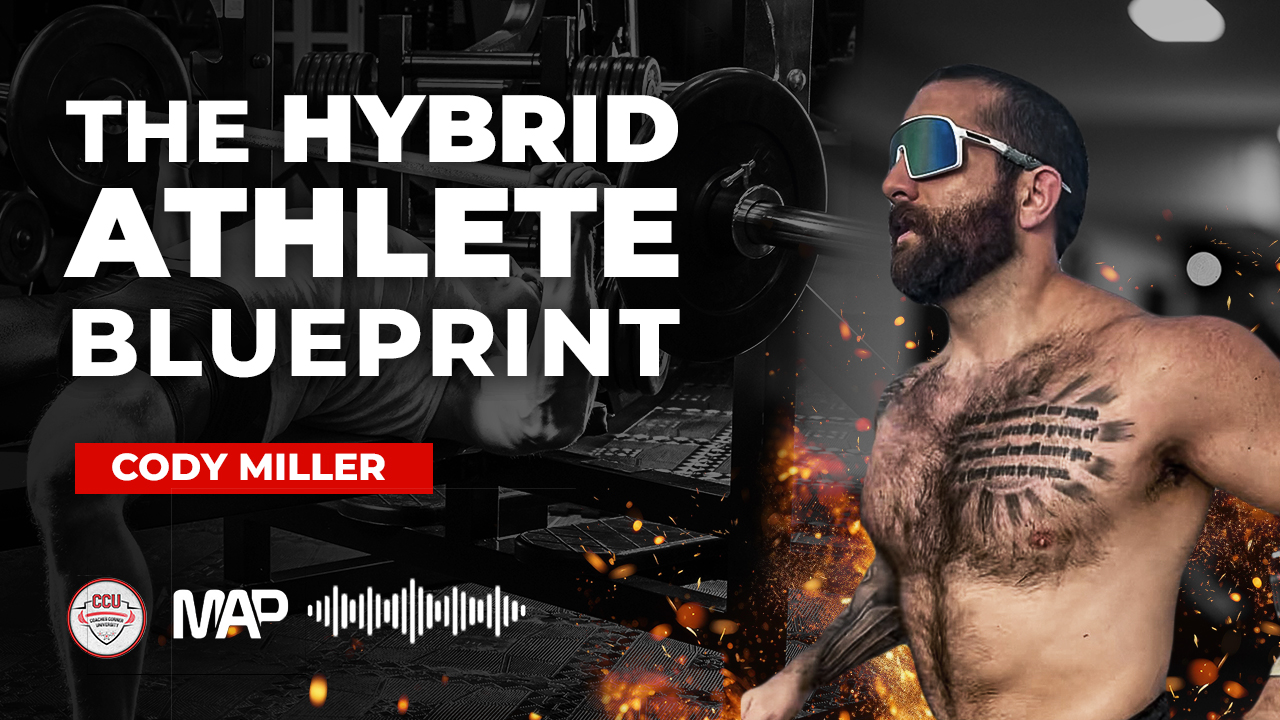
CCU Podcast - The Hybrid Athlete Blueprint Podcast with Cody Miller
The Hybrid Athlete Blueprint
Podcast
In this episode, I sit down with the Strength Coach and Founder of Hoopie Hybrid, Cody Miller. Cody and I met in 2010, when we were both working at Robert Morris University and have been friends ever since.
Cody spent over 10 years as a collegiate strength and conditioning coach before transitioning to tactical strength and conditioning 3 years ago. He runs and lifts (the kids call this “hybrid”) and is training for a 100-mile race in February. He cofounded Hoopie Hybrid with his beautiful wife, Cayt. It launched in January 2024 and comprises online, hybrid training groups and programs. Cody and Cayt enjoy hanging out with their two pitbull mutts, Millie and Ollie, and enjoy going to the beach every spare moment they can.
The path of a strength and conditioning coach is both rewarding and challenging, filled with opportunities for growth, learning, and a profound impact on others' lives. As we navigate this profession, certain fundamental truths emerge that can significantly shape our effectiveness and longevity in the field.
Cody’s discussion with me represents more than just practical coaching advice; it embodies a philosophy of sustainable, practical coaching that balances technical expertise with human connection. Whether you're just starting your coaching journey or looking to refine your approach, these insights offer valuable perspectives on what truly matters in our profession.
Cody’s discussion with me represents more than just practical coaching advice; it embodies a philosophy of sustainable, practical coaching that balances technical expertise with human connection. Whether you're just starting your coaching journey or looking to refine your approach, these insights offer valuable perspectives on what truly matters in our profession.
10 Key Takeaways from The Hybrid Athlete Blueprint
The Value of Personal Experience in Coaching
To truly understand and effectively coach any training modality, you need direct personal experience with it. As Cody emphasizes in the conversation, "To coach it effectively, you have to do it." Young coaches should actively participate in various training approaches they plan to program, even those outside their comfort zone. Make it a priority to set aside time each week to experience different training styles, document your findings, and use these insights to enhance your programming decisions.
Understanding Training Extremes and Adaptation
You don't truly understand effort or adaptation until you explore training extremes. When Cody notes, "You don't really know what effort is until you take things to the extreme," he's highlighting a fundamental truth about athletic development. Design progressive programs that systematically explore different intensities while maintaining appropriate risk management. This understanding helps you guide athletes through their own journeys to discover their true capabilities.
The Zone 2 Paradox
Zone 2 training is simultaneously one of the most valuable and misunderstood methodologies. As discussed, it's often treated as a catch-all for easy training, but its proper application requires a nuanced understanding of heart rate, pace, and breathing metrics. Develop systems to clearly define and monitor training zones, ensuring athletes achieve the intended adaptations rather than just accumulating easy volume.
Managing High-Achievers
Different populations require fundamentally different coaching approaches. The collegiate environment often requires pushing athletes to work harder, while tactical populations typically need restraint. Develop your ability to both motivate and regulate athlete intensity based on their individual characteristics and population norms. Create robust monitoring systems, especially for highly motivated athletes who may need protection from their own behaviour.
The Power of Failure in Development
Strategic failure, at approximately a 15% rate (one in seven attempts), creates optimal learning conditions. Design programs with appropriate challenges that allow athletes to safely test their limits and learn from failures. Regular assessment sessions should be viewed not just as performance measures but as learning opportunities.
Building Long-Term Relationships
True coaching success extends far beyond sets and reps. When Cody mentions "getting invited to weddings... having them continue to be a part of your life," he highlights the profound impact of coaches. Focus on developing genuine connections while maintaining professional boundaries. Create systems for maintaining these relationships even after formal coaching concludes.
Understanding Training Trade-offs
High performance in multiple domains always comes with costs. You can't simultaneously maximize strength and endurance without trade-offs. Help athletes understand and make informed decisions about their training priorities using precise data and examples to illustrate the impact of different training choices.
The Importance of Durability
Performance isn't just about maximum capacity - it's about sustained output over time. As Cody defines it, durability is "being able to stretch out and be more metabolically efficient at given paces." Include specific durability work in training programs, focusing on sustained submaximal efforts that build both capacity and efficiency.
Mental Training Integration
Physical preparation must includedevelopingpsychological skills. The discussion of internal/external association and disassociation strategies during endurance activities highlights this crucial aspect. Incorporate specific mental training protocols and coping strategies into your programming, treating them as essential components rather than optional extras.
Work-Life Balance in Coaching
Career longevity requires balancing passion for coaching with personal life. When Cody states, "I don't want to work 80 hours a week and be in a gym for 80 hours a week," he highlights a crucial lesson many learn too late. Develop sustainable career practices early, creating clear boundaries and systems for work-life balance from the start of your career.
Remember that your coaching development is not a destination but an ongoing process. Each day brings new opportunities to apply these principles, learn from your experiences, and refine your approach. Whether managing high-achieving tactical populations, working with collegiate athletes, or helping general-population clients, these fundamental truths will guide your path forward.
Find Cody
Website -http://hoopiehybrid.com/
Instagram - @hoopiehybrid @cody_hoopiehybrid @cayt_hoopiehybrid
Find the Podcast

Coaches Corner PhD
Get 1-on-1 mentorship with one of the best coaches in the industry!