
Discover The Latest Blogs
Stay updated with Our Informative Blog Posts
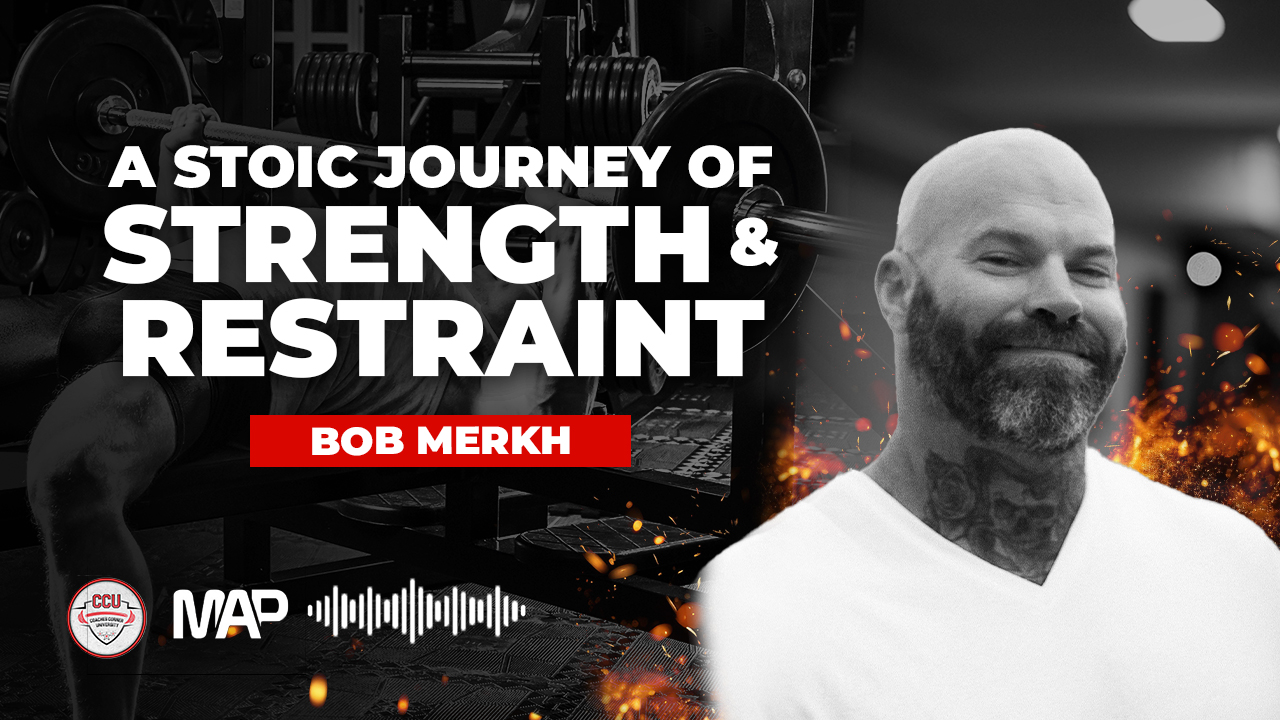
CCU Podcast - A Stoic Journey Of Strength And Restraint with Bob Merkh
A Stoic Journey Of Strength And Restraint Podcast
Today, I got to sit down with Bob Merkh, who is a father, a teacher, a powerlifter, and now an author of Moderation Is For Cowards: A Stoic Journey Of Strength And Restraint, who plans to use his platform to make people’s lives better. He is starting to speak to youth groups and plans to write more. He competed in powerlifting for almost 20 years and had success raw, but much more success equipped. His biggest claim to fame is being the only person to bench press and squat over 1,100 pounds, but he is happier with the reputation he has built than with anything else.
This one's special because I actually did the homework. My buddy Bob Merkh wrote a book, so I read the whole thing cover to cover, and it gave us a lot to dig into. Bob's one of the strongest humans to ever touch a barbell, the first guy to ever squat and bench over 1,100 pounds, but that's not really what this conversation is about. He's a middle school history teacher, a husband and father, a guy who runs a competition gym out of his own basement, and someone who's thought hard about who he is when the sport is no longer the thing. We got into stoicism, identity, what it actually means to find balance, and why he titled the book "Moderation Is for Cowards." If you've ever wrapped your whole sense of self around one pursuit, this is the conversation for you.
Key Quote
"I believe I find balance by cutting out the things that don't matter, not by trying to do everything evenly." — Bob Merkh
Five Core Themes
1. Perspective is the lever. Bob teaches his students that nothing happens to you, things just happen, and how you interpret them is the whole game. He manipulates perspective in his history class on purpose to show kids that the same fact can read a dozen different ways, then turns it on their own social media and their own emotions.
2. Identity has to be built from the inside. When the powerlifting career ended, Bob realized the identity he was afraid of losing was already there underneath the sport. The bar was never the thing. The lessons he pulled from it were.
3. Balance by subtraction. The book title sounds like a rejection of balance, but Bob's version of all-in means ruthlessly cutting distractions so he can pour himself fully into what's left. Family, lifting, teaching. Not everything, evenly.
4. Doing hard things on purpose builds the reserve for the hard things you don't choose.The quad tear, retirement, losing a gym member at 43. Bob keeps coming back to the same idea: you train resilience voluntarily so it's there when life stops asking permission.
5. Legacy is what you leave for people who'll never meet you. From the gym he runs like a family, to the Special Olympics program, to a book now in the hands of 1,200 strangers, Bob's measure of a life is what you give and put out into the world.
Main Take-Home Message
The sport, whatever your sport is, is just the vehicle. Bob's whole message is that powerlifting taught him resilience, patience, and how to do hard things, and the point was never the pounds on the bar. It was learning to carry those lessons into being a better father, partner, teacher, and friend. You don't have to sacrifice your relationships to chase greatness. You have to get clear on your priorities and protect them, train around your life instead of training over it, and remember that you don't have to do the hard thing; you get to.
Find Bob
Purchase his book here
Facebook -https://www.facebook.com/bob.merkh
Instagram -https://www.instagram.com/bob_merkh/
Find the Podcast


Coaches Corner PhD
Get 1-on-1 mentorship with one of the best coaches in the industry!