Discover The Latest Blogs
Stay updated with Our Informative Blog Posts
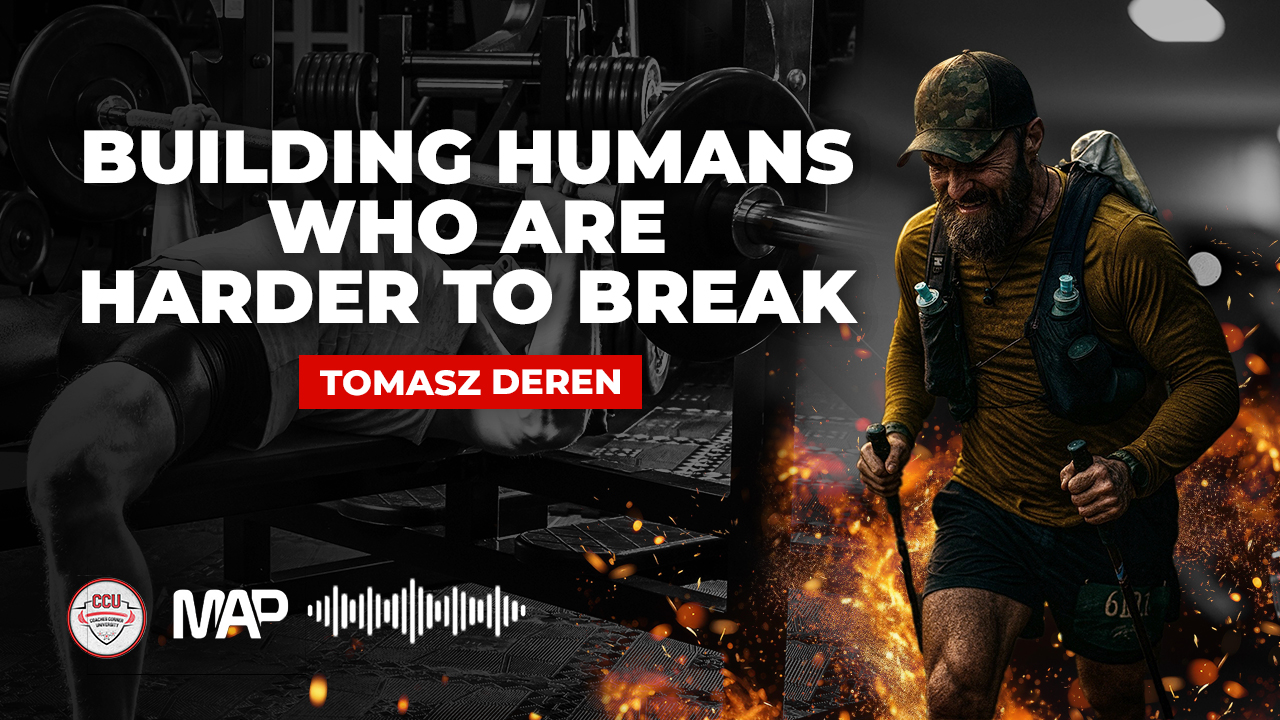
CCU Podcast - Building Humans Who Are Harder To Break with Tomasz Deren
Building Humans Who Are Harder To Break
Podcast
Today I sat down with Tomasz Deren, who is a military strength and conditioning specialist, hybrid athlete coach, and ultra-endurance athlete with nearly two decades of experience building resilient, high-performing humans. He holds a Master’s degree in Physiology, is an Exercise Physiologist, and has spent over a decade working within the Canadian military, coaching everyone from everyday service members to elite tactical athletes. He’s also a two-time finisher of 100-mile ultramarathons, a former gym owner, and a lifelong strength athlete who believes performance should never come at the expense of durability, leadership, or family.
Tomasz is the founder of The Warrior Collective and co-host of The Warrior Collective Podcast, a training philosophy and community built for those who lift heavy, run far, and refuse to separate strength, endurance, and aesthetics. His approach is battle-tested and science-backed—no gimmicks, no fear-mongering, and no random intensity. Whether working with soldiers, busy professionals, or competitive hybrid athletes, Tomasz focuses on building people who are harder to break, capable under fatigue, and disciplined in both training and life. At the core of his work is a simple belief: real fitness should make you more useful, more resilient, and better equipped to lead—on the battlefield, in the gym, and at home.
I’ve known Tomasz since our undergrad days at the University of Ottawa. Tom and I graduated in 2005, and while we both started in strength and conditioning, our paths diverged in fascinating ways. He spent the last 14 years as the Strength and Conditioning Coordinator at the Royal Military College of Canada, where he works with future military leaders and coaches high-level tactical athletes preparing for tier-one selections. But Tom's journey wasn't linear—he's owned a successful gym, completed two 100-mile ultra marathons, and recently launched The Warrior Collective podcast. What makes this conversation so valuable is Tom's willingness to share both his victories and his struggles, from the business decisions that prioritized family over ego to the physical and psychological lessons learned from dragging a destroyed leg for 18 hours through an ultra race. If you've ever wondered how to build a sustainable coaching career while maintaining your own standards, this one's for you.
10 Key Takeaways from Building Humans Who Are Harder To Break
Your Career Path Doesn't Have to Be Linear
Tom's career spanned personal training at the University of Ottawa, collegiate strength and conditioning for varsity athletes, injury reconditioning for military members, and, eventually, his current role at RMC. He also owned Stone City gym for several years. Each phase taught him something different about coaching diverse populations—from general population clients to NHL hockey players to tactical athletes preparing for special operations selection. The lesson? There's no single "right" path in coaching. Your varied experiences become your superpower.
Alignment Between Priorities and Actions Is Non-Negotiable
When Tom's first child was born, he was working 12-14-hour days between RMC and his gym. His wife made it clear: "We don't need the money. We need Dad home." Tom loved the gym, but he loved his family more. He eventually sold the business to one of his coaches, demonstrating that success isn't just about grinding forever—it's about making sure your daily actions reflect your actual priorities. As Tom put it: "When I aligned my priorities with my actions, it was an easy decision."
The Aerobic Base Is the Foundation for Tactical Athletes
Coming from a powerlifting background, Tom initially tried to solve every problem through the lens of strength. But working with infantry officers and special operations candidates taught him that 90% of what tactical athletes need to succeed comes down to aerobic capacity. A 15-kilometre ruck march doesn't care about your squat PR. This forced Tom to confront his own blind spot and completely reshape his training philosophy—and his own training.
You Must Be the Product of Your Product
Tom's decision to pursue ultra running wasn't just personal—it was professional. How could he credibly coach tactical athletes through selection courses requiring massive aerobic capacity if he'd never pushed himself in that domain? He needed to understand what his athletes would experience. This principle applies universally: if you're going to ask clients to do hard things, you'd better be doing hard things yourself.
"Strong Enough" and "Fit Enough" Are Real Standards
For tactical athletes, Tom identified clear benchmarks: 1.5x bodyweight squat, 1.5x bodyweight bench, 1.75-2x bodyweight deadlift, 15-20 pull-ups, sub-10-minute 1.5-mile run, and 40-50 push-ups. Anything beyond these standards starts crossing into specialist territory and compromises other capacities. The lesson for all coaches: identify what "enough" actually means for your population. Ego-driven pursuit of bigger numbers often comes at the expense of well-rounded capability.
Manufactured Suffering Reveals Who You Are
Tom's second 100-miler ended with him tripping and injuring his leg at the 50-mile mark. He spent the next 18 hours dragging his leg with poles as crutches, finishing with 30 minutes to spare before the cutoff. That buckle means more to him than the trophy from his first race, where everything went perfectly. The experience stripped him raw and showed him what he was made of. That's the point—finding your vehicle to explore the darkest parts of yourself.
Identity Tied to Process Is Antifragile
Tom shared a critical insight: when your identity is wrapped in outcomes (weight on the bar, race times, business size), it becomes fragile. Remove the outcome, and you're lost. But if your identity is tied to process—"I am someone who does hard things"—that process can be applied anywhere. Lift heavy, run ultras, have hard conversations, solve complex problems. The more you engage in the process, the stronger that identity becomes.
Work With the Age Group That Keeps You Young
At almost 40, Tom is surrounded by 17-to 19-year-old cadets who cycle through the same age each year. They're a "show me" generation who don't care about credentials—they need to see you demonstrate capability. This keeps Tom sharp, forces him to maintain his own standards, and allows him to impact future military leaders before they develop bad habits. Find the population that challenges you to keep showing up at your best.
Minimum Effective Volume Allows You to Layer Capacities
When programming for tactical athletes who need to be good at everything, Tom's job is finding the minimum effective volume for each capacity. If someone is strong enough, there's no benefit to adding more strength work—it just steals from their ability to develop other qualities.
Authenticity in Content Creation Comes from Your Natural Medium
Tom struggled with the idea of creating online content because he couldn't see himself making contrarian 30-second reels. But long-form conversation? That's how he's taught for 20 years. Rather than force himself into an uncomfortable medium, he launched The Warrior Collective podcast and uses AI tools to chop conversations into shorter clips. The lesson: find the format where you communicate best, then repurpose it.
The Long Game
What struck me most about this conversation was Tom's commitment to the long game. He's not chasing follower counts or trying to scale a massive online coaching business. He works with specific individuals with specific goals, many of whom trained with him years ago at RMC and now seek him out for selection preparation. His content creation isn't client-driven—it's legacy work, a way to share 20 years of hard-earned wisdom with the broader community. Tom's career proves that you can build something meaningful without compromising your values, that you can be successful while prioritizing family, and that the coaches who last are the ones who never stop learning, never stop doing hard things, and never stop showing up as the person they're asking their clients to become. If you're feeling the pressure to grind forever or questioning whether you're on the "right" path, Tom's story is a reminder that there is no single blueprint—just the daily work of aligning your actions with your priorities.
Find Tomasz
IG - @the_warriorco
Spotify - The Warrior Collective
Find the Podcast
Coaches Corner PhD
Get 1-on-1 mentorship with one of the best coaches in the industry!