Discover The Latest Blogs
Stay updated with Our Informative Blog Posts
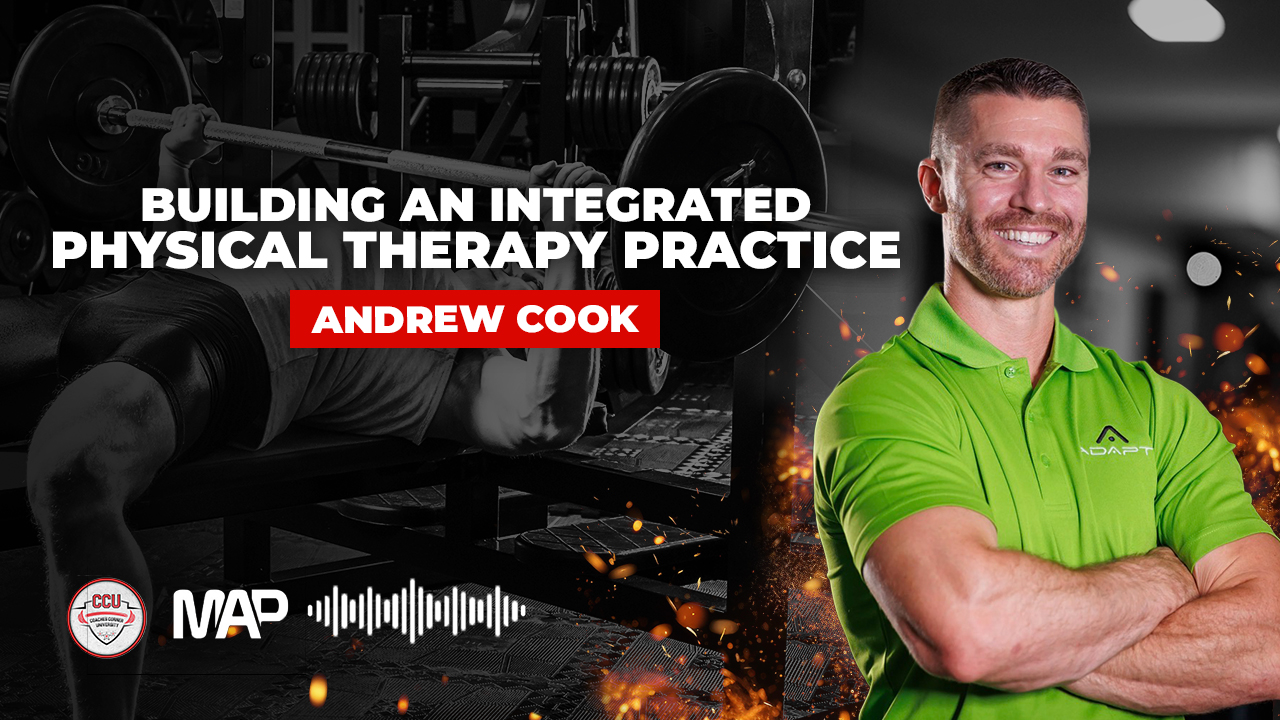
CCU Podcast - Building an Integrated Physical Therapy Practice with Dr. Andrew Cook
Building an Integrated Physical Therapy Practice Podcast
**Sorry for the video quality on this one, guys - we had some technical difficulties, but the discussion was awesome enough to share regardless!
This week, I sat down with Dr Andrew Cook, PT, DPT, CSCS, BFRc, FDN Andrew Cook is a Doctor of Physical Therapy and Certified Strength and Conditioning Specialist. He received his degree in Physical Therapy from Florida Gulf Coast University and his CSCS certification through the National Strength and Conditioning Association. Andrew received his Bachelor's degree in Human Development from Binghamton University, where he was a 4-year starter for the Division 1 lacrosse program. While there, he was named to the American East All-Rookie team and the American East All-Academic Team, and served as a team captain. Andrew combined his love of sports and fitness with his passion for helping others and founded Cook Performance & Therapy upon graduation. Andrew has worked with clients of all ages and backgrounds. From young athletes to active adults, Fortune 500 clients, individuals looking to avoid joint replacement surgery and those suffering from pain or dysfunction that want to get back to doing what they love. He uses hands-on manual therapy, exercise prescription, and movement analysis to help you achieve pain-free mobility and perform at your best. He also utilizes Functional Dry Needling, Blood Flow Restriction Training and Instrument Assisted Soft Tissue Mobilization (IASTM).
I've been meaning to have this conversation for a while. Andrew Cook runs Adapt Performance and Training in North Carolina, and when I first walked into his clinic, I thought I was in a gym that just happened to have some treatment rooms. Turns out that's exactly the point. Andrew's built something that flies in the face of the traditional physical therapy model—no insurance billing, no ticky-tacky rehab exercises, no three-times-a-week-for-eight-weeks bullshit. Instead, he's created a facility where movement-based rehab actually prepares people to train hard, not just check boxes for insurance reimbursement. We connected through a mutual client, and working with Andrew validated everything I believe about what rehab should look like: load the tissue, create confidence, and get people back to performing better than before they got hurt.
10 Key Takeaways from Building an Integrated Physical Therapy Practice
Communication between providers isn't optional—it's essential for client outcomes
Andrew makes it a point to know every provider his clients work with. No stepping on toes, no conflicting recommendations, no creating confusion about who the client should listen to. When coaches and therapists communicate, clients improve faster because everyone's rowing in the same direction.
Movement-based rehab requires space, equipment, and the guts to push people
The biggest space in Andrew's facility is the gym floor. Not the treatment rooms. He's got machines, dumbbells, sleds, turf—everything needed to actually load people and prepare them for the demands of training and sport. You can't rehabilitate someone back to high performance with resistance bands and clam shells.
The insurance model handcuffs good therapists from doing great work
When you're limited to 30-minute sessions, required to only treat the joint above and below the injury, and incentivized to keep people coming back, you can't actually solve problems. Andrew went out-of-network from day one, which means his only metric of success is whether the client gets better and no longer needs him.
Assessment should inform training, not replace it
Andrew spends 15 minutes on his movement screen and history, then loads people. The first week of actual training tells you more than an hour of testing ever will. If your assessment takes so long that you don't have time to do anything with the information, you're doing it wrong.
Functional benchmarks beat arbitrary timelines
Instead of "at eight weeks you'll do this," Andrew progresses based on what the person can actually do. Tissue healing time matters, but within those constraints, if someone can handle more load with good movement quality, they get more load. Simple as that.
Creating gaps builds trust and autonomy
Andrew equips clients with tools, sends them to practice, and creates space for self-regulation. That gap allows people to figure out what works for them while knowing they have support when needed. It's the opposite of creating dependence.
Referring out strengthens your reputation when you choose the right people
The fear that you'll lose a client by referring out is backwards. If you keep someone who needs specialized help and don't get them better, you lose them anyway. But refer them to the right person, and they come back more confident in your judgment.
Hiring slow and firing fast protects everything you've built
Andrew learned the hard way that hiring out of necessity creates problems. He now conducts three interviews, including a practical exam, and a 90-day probationary period. Your reputation is only as strong as the worst person on your team.
Paying upfront changes client behaviour
When people pay for their session when they book it, they show up. It's not about the money being a barrier—it's about the psychological commitment that happens when you've already invested before walking through the door.
The best rehab prepares people to train harder than before they got hurt
Andrew's goal isn't to return someone to their pre-injury state. It's to get them performing at a higher level. That requires a completely different philosophy than managing symptoms or hitting insurance benchmarks.
If you're a strength coach, your relationship with the physical therapists you refer to matters more than you think. Andrew's approach showed me what's possible when rehab and training work together rather than operate in separate universes. The coaches who build strong referral networks with providers who share their values—movement-based, client-centred, outcome-driven—create better results for their clients and stronger businesses for themselves. Find your Andrew. Vet them properly. Build the relationship. Your clients will thank you for it.
Find Andrew
Website:Www.adaptperformanceandtraining.com
IG - @adaptperformancecenter
Find the Podcast
Coaches Corner PhD
Get 1-on-1 mentorship with one of the best coaches in the industry!