Discover The Latest Blogs
Stay updated with Our Informative Blog Posts
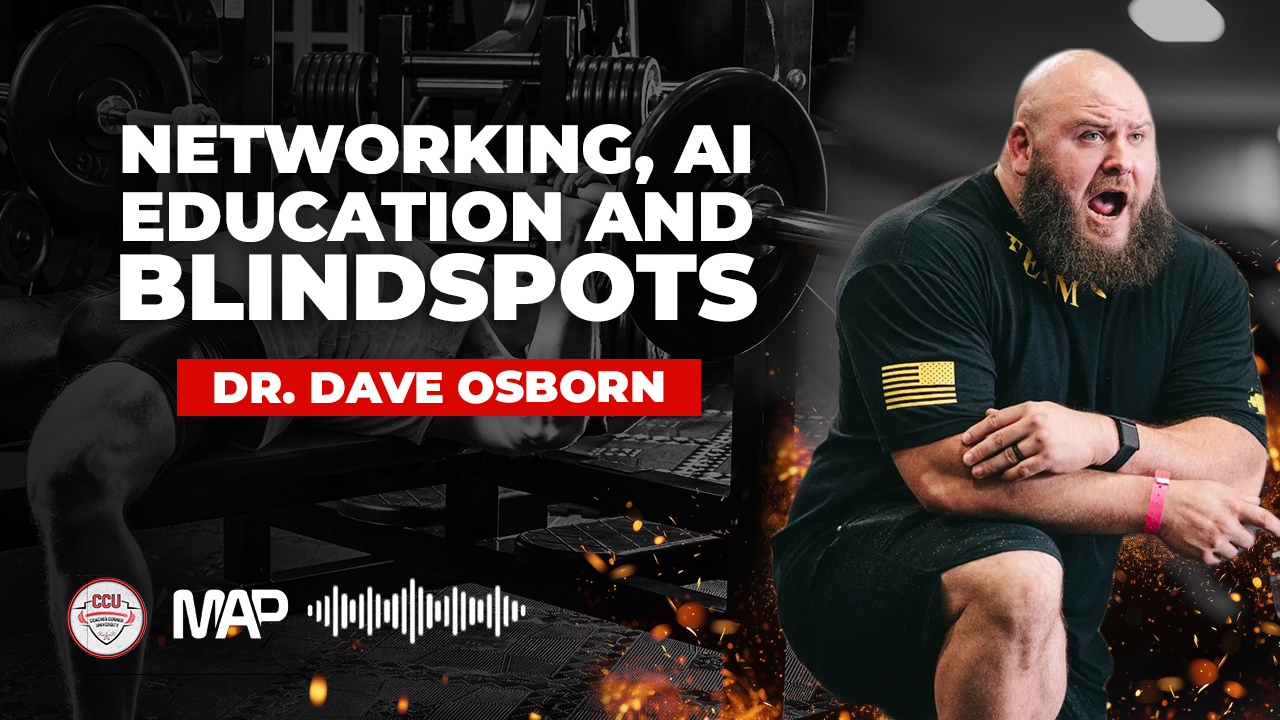
CCU Podcast - Networking, AI, Education and Blindspots with Dr. Dave Osborn
Networking, AI, Education and Blindspots
Podcast with Dr. Dave Osborn
Dr. Dave Osborn returns to the pod for a second time to discuss the current state of the powerlifting coaching space, networking, AI, client relationships, and the big blind spots we see among young coaches.
Dave has spent more than two decades in strength sports as an athlete, coach, researcher, and builder of Team OPS, one of the most respected powerlifting communities in the Pacific Northwest. As the founder and owner of OPS Gym, a private strength and conditioning facility that has operated successfully for 12 years, Dave has shaped a culture defined by high standards, deep integrity, and an unwavering belief in the power of effort.
Dave comes from a family of coaches and educators. He began coaching at age 12 alongside his father and has spent the past 25 years teaching athletes how to grow physically, mentally, and emotionally through the pursuit of strength. His doctoral dissertation, “Effects of Communication Scheduling on Affective State and the Coach–Athlete Relationship in Online Powerlifting Coaching,” reflects his lifelong commitment to understanding not just how athletes get strong, but how coaches create meaningful, lasting change.
Paul and Dave kick off by reflecting on the Arnold Sports Festival, specifically the value of showing up in person, building real relationships, and why an online-only existence keeps coaches trapped inside a 12x12 box.
KEY QUOTE
"My focus has always been, how can I make the sport better? What can I do to contribute and help others?"— Dr. Dave Osborn
5 CORE THEMES
Give-first networking— Relationships built on contribution rather than extraction produce the most lasting and unexpected opportunities.
Toolbox vs. hammer— Coaches who only know one system turn every client into a nail. A wide range of tools, combined with knowing which question to ask, is what separates great coaches from adequate ones.
Mentorship collapses time— Whether in programming or business, having someone in your corner who has already made the mistakes shortens your learning curve dramatically.
Communication is a coaching system— How and when you respond to clients directly impacts motor learning, client retention, autonomy, and the quality of the coach-athlete relationship.
The AI gap— AI can produce information, but it cannot replicate the human relationship, the soft skills, the standards of execution, or the contextual judgment that defines elite coaching.
MAIN TAKE-HOME MESSAGE
The best coaches don't just know more — they know what questions to ask, when to ask them, and how to involve the athlete in the answer. That skill can't be outsourced to an AI, copied from a single mentor, or shortcut by hustle. It's built through a wide education, deep relationships, and the wisdom to apply the right tool at the right moment.
Find Dr. Osborn
Instagram: @drdaveatops
Website:https://www.opsgym.com/
Find the Podcast
Coaches Corner PhD
Get 1-on-1 mentorship with one of the best coaches in the industry!