
Discover The Latest Blogs
Stay updated with Our Informative Blog Posts
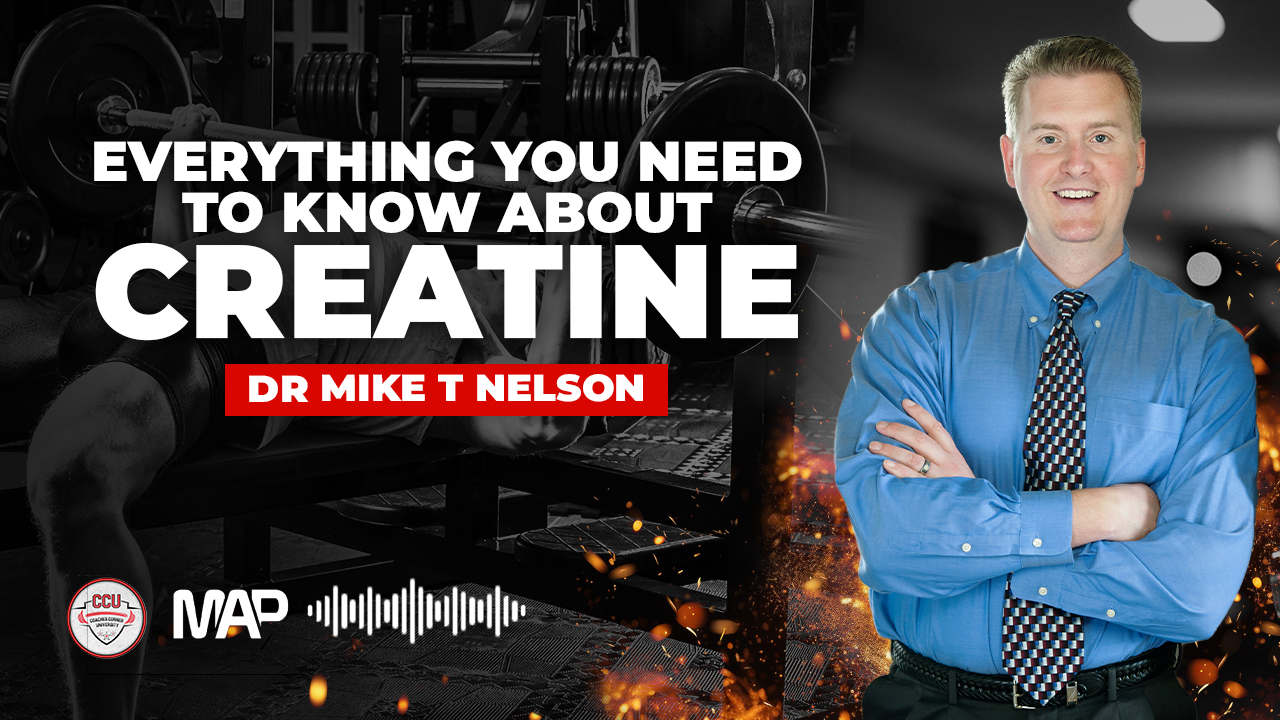
CCU Podcast - Everything You Need to Know About Creatine - Dr. Mike T Nelson
Dr. Mike T Nelson
Everything You Need to Know About Creatine
Returning to the podcast for the 3rd time is Dr. Mike T. Nelson, PhD, MSME, CSCS, CISSN, FISSN, a researcher, educator, and human performance specialist focused on metabolic flexibility, physiologic flexibility, and performance nutrition. For more than 25 years, he has studied how the human body adapts to stress, training, nutrition, recovery, and extreme environments.
He holds a PhD in Exercise Physiology and an MS in Mechanical Engineering with an emphasis in biomechanics, and has published research in peer-reviewed journals in both physiology and engineering. Dr. Nelson is an Associate Professor at the Carrick Institute and the creator of the Flex Diet Certification, Physiologic Flexibility Certification, and Flexible Meathead Cardio. His work has been used with Canadian Special Operations Forces, U.S. operators preparing for selection, and practitioners working across the NFL, NHL, NBA, and other high-performance environments. He has also presented his research to DARPA
This time we talk about the supplement everyone suddenly has an opinion on. Creatine has gone from a bodybuilding staple to something your mother's book club is asking about, and with that mainstream attention has come a wave of gummies, esters, and confident claims that outrun the actual data. Mike has a book coming out on it, and in this conversation he walks through where creatine actually came from, what the research supports across muscle, brain, and bone, where the dosing conversation currently stands, and why he still reads the full studies himself rather than trusting a synthesis tool. He also does something rare on a podcast about supplements: he says "I don't know" out loud, more than once.
KEY QUOTE
"Caffeine is the credit card of sleep. It works, you'll be able to spend money now, but it's not free. There's no physiologic free lunch." Dr. Mike T Nelson
FIVE CORE THEMES
1. The research history matters more than the marketing.
Mike traces creatine back to Dr. Roger Harris, who was told his entire premise was impossible. Everyone assumed creatine wouldn't survive digestion, wouldn't be reassembled, wouldn't get stored in muscle, and that muscle was already saturated anyway. All four assumptions turned out to be wrong. Knowing that history is what lets you evaluate the claims being made about creatine today.
2. Complexity is usually a sales tactic.
Creatine monohydrate has extremely high bioavailability and hundreds of peer-reviewed studies behind it. Mike's position is that there is no real problem for the ethyl esters, buffered versions, and HCL formulations to solve. He recounts the ethyl ester pitch built on a glass of water looking clearer, and the HCL pitch marketed at women on the promise of needing less, with the point that clients who swore by it were most likely just taking a smaller dose of something that already worked.
3. Systemic benefits track back to the same mechanism.
Whether the conversation is muscle, brain, or bone, Mike keeps returning to energetics. Anything that runs on ATP is a candidate for benefit. He notes the brain data appears strongest when you add stress to the system, whether that's sleep deprivation, TBI, neuroinflammation, or cognitive load, and he's honest that dosing for those outcomes is still unsettled, likely somewhere in the 10 to 20 gram range.
4. Know what your labs are actually measuring.
Creatine supplementation elevates creatinine, and creatinine is one of the primary markers physicians use to assess kidney function. Mike has had to walk more than one doctor back off the ledge and rerun blood work. His practical guidance is to come off creatine three to five days before labs, and if levels are still elevated, then investigate properly.
5. Optimization without a foundation is theatre.
Mike's frustration is with people fielding questions about experimental peptides with four animal studies behind them while remaining suspicious of creatine. His response to the person chasing mitochondrial enhancement with a VO2 max in the twenties is to go do some aerobic training first. Stopgaps have a legitimate place for shift workers, travelling athletes, and acute demands. They don't replace the basics.
MAIN TAKE-HOME MESSAGE
Mike's closing point isn't about creatine at all. It's that most people already know what works and are using data to justify what they're doing rather than to test it. His challenge is to run your own experiment. If you believe something is making you stronger or fitter, find a way to measure it, and be willing to find out that it isn't. He suspects the reason more people don't measure is that they're afraid the time and effort won't show up in the result, so they keep repeating the same thing indefinitely. Creatine is a well-evidenced, cheap, safe piece of the foundation. It is not a substitute for asking better questions about your own training.
Find Mike
Website - www.miketnelson.com
Instagram - https://www.instagram.com/drmiketnelson/
Find the Podcast
Keep Raising the Bar,
Paul Oneid MS, MS, CSCS
Coaches Corner PhD
Get 1-on-1 mentorship with one of the best coaches in the industry!