Discover The Latest Blogs
Stay updated with Our Informative Blog Posts
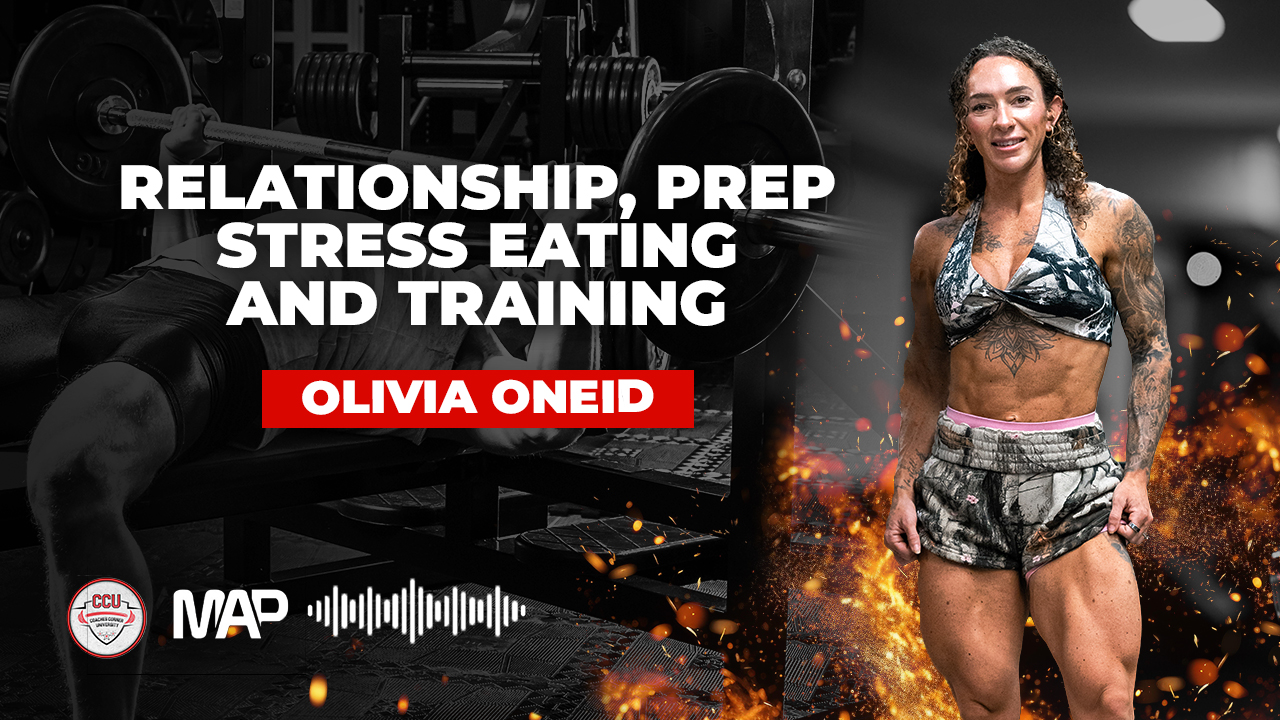
CCU Podcast - Q&A with Olivia Oneid - Relationship, Prep, Stress Eating and Training
Q&A with Olivia Oneid - Relationship, Prep, Stress Eating and Training
Podcast
I recorded this Q&A with Olivia back in March 2024, when she was 11 weeks out from her show. For whatever reason, it never made it out of the vault. But listening back to it recently, I realized the conversation holds up. The questions people asked then are the same ones coaches still ask now. The principles Liv and I discussed about communication, training, nutrition, and client management haven't changed. If anything, another year of working together and navigating these dynamics has only reinforced what we talked about.
Twenty-four hours a day together, training together, running businesses together, and navigating competition prep while maintaining relationship quality and client work creates a unique laboratory for testing what actually works. Not theory. Not what sounds good on a podcast. What holds up under pressure when energy is low, patience is thin, and the variables are stacked against you?
What became clear throughout this conversation is that whether you're managing a client through a fat loss phase or supporting a partner through contest prep, the fundamentals remain the same. Here's what Olivia and I learned through the process of training, coaching, and living this shit together.
10 Key Takeaways from Q&A with Olivia Oneid: Relationship, Prep, Stress Eating and Training
Unsaid things become future resentments
Paul frames this perfectly in the conversation with Olivia: anything that goes unsaid is a decision in that moment to resent the person later. If you're not communicating what you need, you're agreeing to harbour resentment down the road. This applies equally to client relationships as it does to personal ones. When a coach assumes a client understands the plan without explaining it, or when a client feels confused but doesn't ask questions, you're building resentment into the relationship. The same pattern shows up everywhere. Paul never wants to operate his relationship on assumptions, and that's exactly how you should approach client communication.
Energy depletion is real and requires proactive boundaries
As Olivia gets deeper into prep, both she and Paul acknowledge that patience thins and energy dips. But rather than hoping things work out, they've built communication protocols around it. Olivia will wake up and immediately communicate when she's feeling rough, setting expectations for the day. Sometimes that means silent walks or podcast walks with headphones on, just sharing space without conversation. The lesson for coaches is that you need to help clients set boundaries around their energy expenditure during demanding phases. A client deep in a deficit needs permission to protect their bandwidth, not judgment for having less to give.
True overtraining is clinical, not just feeling tired
Paul and Olivia both laughed at the overtraining question because most people will never train hard enough to actually overtrain. Clinical overtraining presents with decreased sleep quality, decreased libido, decreased appetite, joint pain, increased inflammation, and digestive issues. If you're just feeling a bit tired or sore, that's not overtraining. That's life stress accumulating on top of training stress. The solution isn't to back off training immediately but to audit sleep, nutrition, and stress management first. Most people dramatically underestimate how much they can handle when lifestyle variables are dialled in.
Volume tolerance decreases with age and must be adjusted accordingly
Paul admits something he wishes weren't true: as he's gotten older, he can't tolerate as much training volume, even though he can still train at the same intensity. Even with excellent sleep, nutrition, and stress management, his ability to recover from high volumes has decreased. The practical application is that standardizing intensity and modulating volume based on recovery is the sustainable approach. If you're consistently taking sets to or close to failure, adjust the number of working sets based on how you're progressing week to week.
Warm-up sets should prime, not fatigue
Both Paul and Olivia emphasize that warm-up sets need to get you acclimated to the load without accumulating fatigue that limits your top set performance. Paul typically takes three to four warm-up sets maximum, jumping in larger increments rather than creeping up pound by pound. If you're doing ten warm-up sets before your working sets, you're pre-exhausting yourself and limiting the stimulus of the sets that actually matter. By the third or fourth exercise in a session, you may only need one light set to feel the groove of the machine before jumping to your working weight.
Weight is a form of mechanical tension and cannot be ignored
While people love to say that weight doesn't matter, Paul is clear that weight is a form of mechanical tension. If you can lift with great technique and hit the same reps with more load in an unfatigued state than in a fatigued state, the stimulus will be greater. The goal is to find the perfect balance between technique, load, and fatigue accumulation across the entire workout. This is why warm-up efficiency matters and why you want to be as fresh as possible going into your top sets.
Stress eating masks emotions you need to feel
When someone asks how to stop stress eating, both Paul and Olivia immediately identify the operative word: stop. The habit of seeking food for soothing served you at some point in your life, possibly helping you cope with trauma or get through a difficult period. But now it no longer serves you. The solution is to stop in the moment when you're having those feelings and ask what you actually need. Food eaten while stressed never tastes as good as it would if you were happy, never lasts as long as you want, and always leads to guilt and shame afterward. The emotions you're trying to mask, whether sadness, anxiety, or anger, are normal human conditions that teach you something about yourself when you let yourself feel them.
Communication is the number one attribute of a great coach
When asked about the most important coaching attributes, both Paul and Olivia immediately answer: communication. Open, honest dialogue between coach and client prevents issues from festering and allows both parties to address challenges as they arise. Coaching is fundamentally a relationship, and you want to work with someone who can foster a strong relationship with you, nurture you toward your goals, and handle hardships together without triggering setbacks. If you're interviewing a coach, ask how they'd handle your struggles or celebrate your successes. Their answers will tell you everything about whether they're the right fit.
Slow progress is sustainable progress, but expectations must be realistic
The question about whether a coach is taking it slow for the client's benefit or just milking them for money reveals a fundamental misunderstanding about progression rates. In most cases, slower rates of progression are more sustainable. The coach's job is to lay out the timeline, explain the metrics being tracked, and show how current progress aligns with the goal. But it's also the coach's responsibility to ensure the client's expectations are realistic and that the client is checking all the boxes required for progress. If steps aren't being hit or macros aren't being tracked consistently, setbacks will derail progress regardless of how well-designed the plan is.
As a coach, it's always your fault
Paul states this unequivocally: if your client can't follow the plan, it's always the coach's fault. Either you didn't create a plan appropriate for their level of preparedness and skill, or you didn't provide them the tools to execute it. This doesn't mean clients have no accountability; it means the coach must take ownership of the relationship and its outcomes. If a client is struggling, the coach needs to check in, hold them accountable, and adjust the approach. What doesn't get measured can't be managed, so the more metrics you have, the more information you can base your decision-making on.
Here's what I keep coming back to: whether you're managing your own training through a demanding phase, supporting a partner through prep, or guiding clients toward their goals, the same fundamentals apply. Communicate openly, set realistic expectations, track metrics, adjust based on feedback, and take ownership of outcomes. The coaches who build sustainable businesses are the same ones who build sustainable relationships. They don't operate on assumptions, they don't let things go unsaid, and they don't blame external factors when things aren't working. If you're struggling in your coaching practice, audit your communication first. If you're struggling with clients who can't follow the plan, audit whether the plan matches their actual lives. And if you're wondering whether you're making progress fast enough, stop and ask whether your expectations align with the boxes you're actually checking. Everything else is just noise.
Find Olivia
Olivia is nationally qualified as both a bodybuilder in the Wellness category and in Olympic Weightlifting, as well as a competitive Powerlifter and Crossfitter. She has been passionate about helping others achieve their goals through nutrition and training since completing her degree in Kinesiology and Health Promotion in 2017 from the University of Guelph-Humber. Along with being a Co-Owner at MAP, Olivia operates PeachGang Group Training. She puts her whole heart into everything, including her client's success, and provides them with nothing but the best.
*Coaching -https://olivia.masterathletic.com/
*PeachGang Training -https://marketplace.trainheroic.com/brand/peach-gang?attrib=549740-web
*Instagram - @oliviaoneid
*Email -[email protected]
Find Paul
Paul's singular goal is to raise the bar for coaching. He is committed to being the signal through the static of the fitness and health industry.
If you're a coach looking to take your education to the next level, make sure to visitwww.coachescorneru.com.
If you're interested in coaching from Paul - https://paul.masterathletic.com/
Find him on Instagram: @pauloneid, @coachescorneru, @masterathleticperformance
Find the Podcast

Coaches Corner PhD
Get 1-on-1 mentorship with one of the best coaches in the industry!