
Discover The Latest Blogs
Stay updated with Our Informative Blog Posts
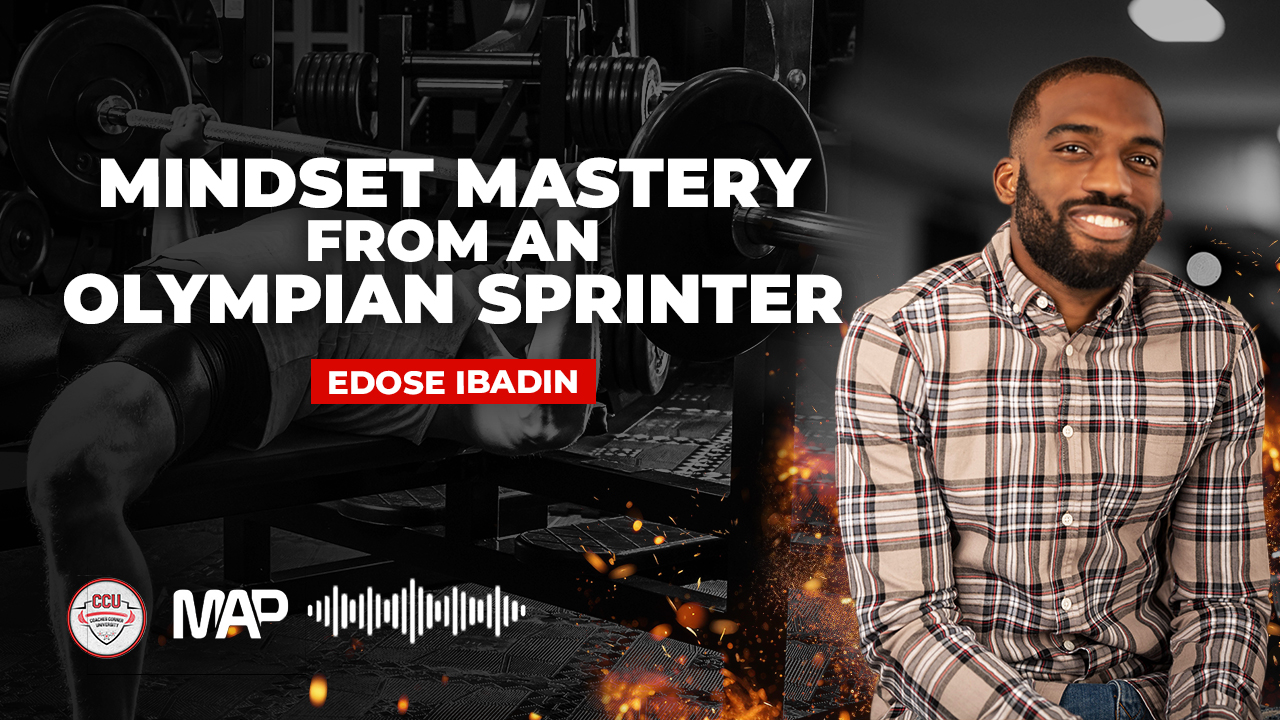
CCU Podcast - Mindset Mastery From An Olympian Sprinter with Edose Ibadin
Mindset Mastery From An Olympian Sprinter
Podcast
This week, I got to sit down with Edose Ibadin, a coach and a 2024 Olympian for Team Nigeria in the 800m track event, a professional runner for Under Armour who went from being an average college athlete to an Olympian.
I've been coaching for many years, and I've seen countless athletes with raw talent never reach their potential. Then I meet someone like Edose, who calls himself an "average college runner" and goes on to compete at the 2024 Olympics for Team Nigeria in the 800 meters. The difference? It wasn't some secret training protocol or genetic advantage. It's something most coaches overlook—and you can teach your athletes starting today.
Edose's journey from never making an NCAA final to running 1:44 and earning a contract with Under Armour isn't just an inspiring story. It's a blueprint for what happens when you combine relentless consistency with proper mental conditioning. As someone who's built a business on systematic approaches to coaching, this conversation reminded me that the mental game isn't some optional add-on. It's the foundation for everything else.
10 Key Takeaways from Mindset Mastery From An Olympian Sprinter
Excellence Is Mediocrity Repeated
When I asked Edose how he went from average to Olympian, his answer was almost offensive in its simplicity: "Just doing basic things really well and consistently over a long period of time." No shortcuts. No secret sauce. Just showing up and executing the fundamentals day after day, year after year. The boring work that doesn't look impressive on social media is exactly what separates those who make it from those who don't.
The 800 Meter Teaches Balance
Edose identified his college deficit immediately—he was strong on speed but weak on endurance. The 800 meter sits at that brutal intersection where sprinting meets distance running. For coaches, this is a reminder that identifying specific weaknesses matters more than generic "work harder" advice. His college training focused heavily on speed, but making the jump to elite level required developing the aerobic capacity to finish races strong.
The Post-Grad Reality Check
Four years between graduation and sponsorship. Living at home. Taking public transportation to practice. Working odd jobs and tax preparation gigs for $200-$500 stipends. Edose's path wasn't glamorous—it was the reality most athletes face. His club team donors funded his metro rides while he completed a graduate degree in IT and software engineering, partly to keep his Nigerian immigrant parents from pressuring him to quit. The lesson? Real development takes time, and the system isn't designed to support that timeline.
The Mental Shift That Unlocked Everything
After two years stuck at 1:45, Edose asked an Olympian how to break through. The response: "It's all up here." That's when he started treating mental training with the same seriousness as physical training. He read "The Champion's Mind" by Dr. Jim Afremow and began visualizing before every workout, not just races. Then COVID hit, he got his first injury in 11 years, and the mental work became non-negotiable. That season? He ran 1:44—his first PR in two years.
First-Person Visualization Changes Everything
Edose doesn't just visualize the race. He visualizes tying his shoes. The feeling of his clothes. The texture of the track. Every drill, every stride, every sensation—all in first-person perspective. He gets neurologically aroused during visualization sessions, feeling his feet hitting the ground with each mental stride. This isn't casual daydreaming. This is training your nervous system to execute before your body ever steps on the track.
Let Go of Outcomes to Achieve Them
The performance summit moment that changed Edose's approach: learning to let go of outcomes entirely. He couldn't control the weather, the track, the competition, or even the clock. He could only control his effort, his actions, and his response. Once he let go of the attachment to making the Olympics and focused purely on daily execution, he started having more fun—and that's when everything clicked. The destination became a byproduct of enjoying the journey.
You'll Spend More Time Climbing Than at the Peak
When Edose signed his Under Armour contract, he was ecstatic for about five minutes. Then reality hit: "I've got practice tomorrow." After the Olympics, a friend asked if he was okay—"It's over." That moment, the one he'd visualized for years, was gone in an instant. The lesson became crystal clear: if you don't learn to love the process, you'll spend your entire career chasing fleeting moments that disappear before you can enjoy them.
Comparison Is the Thief of Joy
As a volunteer high school coach, Edose sees kids comparing themselves to athletes worldwide through social media. They see someone in Australia run fast and declare themselves "cooked." His message: just because you're slow at 16 doesn't mean you'll be slow at 21. Trust your process. Focus on your plan. What works for someone else might not work for you, and you can't predict where you'll be in five years based on where you are today.
The Boring Talents Win
Consistency. Showing up on time. Coachability. Good character. These aren't flashy abilities, but Edose identifies them as his true talents—the things that don't require innate genetic gifts but make everything else possible. He argues that while these traits might not seem like "talents," some people are naturally better at focus and consistency than others. His superpower wasn't blazing speed—it was the ability to do the boring work without fail.
Be Your Biggest Fan
If you talked to yourself the way you talk to athletes you admire, you'd have less self-doubt and negative self-talk. Edose refers to the Kobe fan who, even after LeBron broke Kobe's record, said, "still the GOAT though." That unwavering support, that refusal to abandon someone regardless of outcomes—that's how you need to show up for yourself. Not arrogance. Not delusion. Just the same loyalty and compassion you'd show someone you truly believe in.
The Real Work Starts Between Your Ears
Edose went from running 1:48 in college to 1:44 as a professional, from never making an NCAA final to competing at the Olympics, from struggling to pay for metro rides to earning an Under Armour sponsorship. The physical training mattered, but the breakthrough came when he started training his mind with the same intensity he trained his body. As coaches, we can teach athletes to lift heavier, run faster, and move better. But if we're not teaching them to think differently, we're only doing half our job.
Find Edose
Email -[email protected]
IG -@eibadin
Find the Podcast

Coaches Corner PhD
Get 1-on-1 mentorship with one of the best coaches in the industry!