
Discover The Latest Blogs
Stay updated with Our Informative Blog Posts
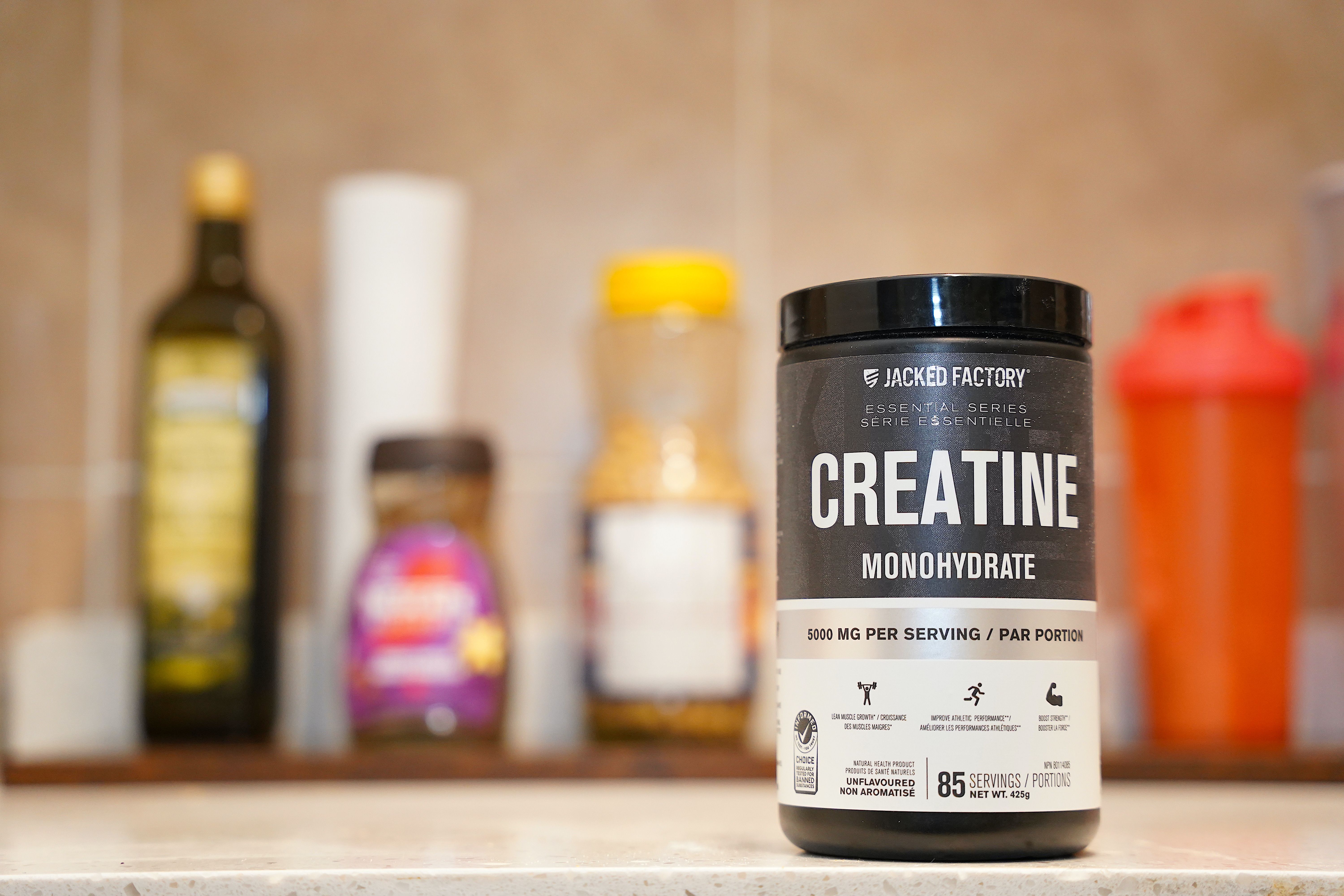
5 Grams is the Wrong Dose for Half the Reasons People Take Creatine
5 Grams is the Wrong Dose for Half the Reasons People Take Creatine
Five grams a day. It's on every label, in every certification manual, and it's what most of us have been telling clients for years.
For building muscle, it's correct.
For most of the other reasons people over 40 start taking creatine, it isn't — and the research that changed this is recent enough that a lot of good coaches haven't caught up.
I had Dr. Mike T. Nelson on the podcast to walk through it. PhD in exercise physiology, has been using creatine himself since 1995, and is one of the few people who'll tell you where the evidence stops.
He wrote a 47-page manual on all of it and gave me a code for you.
Transparency: I get a cut if you buy through my link. I'd push this one regardless, because if you coach masters’ athletes, you are probably under-dosing them right now.
What Mike Had to Say...
The dosing research shifted mostly from 2020 onward, with the bone and brain work landing in the last two or three years. If you certified before 2022, your dosing chapter is out of date. That's not a criticism; it's just the timeline.
Here's the breakdown.
For skeletal muscle — the original use case, the strength and power and hypertrophy story — 5 g/day works. Muscle takes up creatine readily, saturation plateaus somewhere around 150–200 mmol/kg dry muscle, and 5 grams gets most lifters there in three to four weeks of consistent use. No loading phase required unless you're in a hurry.
Bone doesn't behave like muscle. Neither does the brain. And bone and brain are why most people over 40 are interested in the first place.
Look at what happened in the bone literature.
In 2023, Philip Chilibeck and colleagues published the most rigorous human creatine-bone study we have. Two years long, over 260 postmenopausal women, a dose of 0.14 g/kg/day — roughly 8 to 12 grams for most participants — paired with resistance training.
Bone mineral density: no significant change at the femoral neck, total hip, or lumbar spine. That result disappointed many people, including me.
But BMD is an incomplete measure. It tells you mineral quantity per unit area. It doesn't tell you about architecture — cortical thickness, cross-sectional area, the geometry that actually determines whether a bone resists fracture. And on those measures, the creatine group showed significant preservation. They also walked faster on a timed test.
In an aging population that is steadily losing bone, preservation is clinically meaningful.
Now, the dose comparison. Sales and colleagues, 2020, ran a two-year trial in older women at 3 g/day. Result: nothing. No density change, no microarchitecture change.
Same population, same duration, different dose, completely different answer. Three grams is a polite gesture. Ten-ish grams shifts the architecture.
Candow, who co-authored the Chilibeck trial:
"I think 10 grams a day checks all the boxes from bone, brain and muscle. I personally take at least 10 grams a day."
The brain story follows a similar pattern. Brain uptake is slower and smaller than muscle uptake — humans show roughly a 5% increase in brain phosphocreatine on MRS, against 30–50% in rodent models. Higher doses over longer periods are likely needed to move brain stores into an interesting range. I want to be careful here: the optimal brain dose is genuinely not established yet, and anyone telling you otherwise is ahead of the data. But the consensus drift is clearly toward more than five.
So, the practical map by goal:
Young lifter chasing the bench press — 5 g/day is fine, any time, with food.
Masters athlete, 50+, wanting muscle plus bone plus cognition — roughly 0.1 to 0.14 g/kg/day, which lands around 7 to 12 grams. Split it into two 5-gram doses with meals.
Bone health as a primary goal — at least 10 g/day, and paired with resistance training, because the bone effect appears to be largely mediated through improved training rather than direct action on bone. Creatine without lifting should not be expected to do much here.
Contact sport athlete — 10 g/day year-round.
And the one worth sitting with: if you have master's clients on 5 g/day for bone health, they are not getting the intervention they think they're paying for. Adjust the dose and adjust the conversation.
One practical note on scaling up. GI distress is dose- and serving-size dependent, not total-intake dependent. A single 10-gram hit is considerably rougher than two 5-gram servings, even though the daily total is identical. Split it, take it with food, and most complaints disappear.
Dr. Mike T. Nelson, PhD
— — —
The full prescribing protocols — by sport, by population, by goal, with the body-weight math worked out — are in Section 13 of the Complete Creatine Manual. Section 8 covers the bone literature in depth; Section 9 covers the brain. 47 pages, 50+ peer-reviewed references, with Dr. Darren Candow, Dr. Scott Forbes, and Dr. Eric Rawson throughout.
$37. Code PAUL takes $10 off, so $27.
30-day refund, no questions asked.
https://creatine.miketnelson.com
Note: 0.14 g/kg works out to about 11 grams for an 80 kg athlete. If you're scaling someone up, do it gradually and split it across two meals.
Keep Raising the Bar,
Paul Oneid MS, MS, CSCS
Coaches Corner PhD
Get 1-on-1 mentorship with one of the best coaches in the industry!