
Discover The Latest Blogs
Stay updated with Our Informative Blog Posts
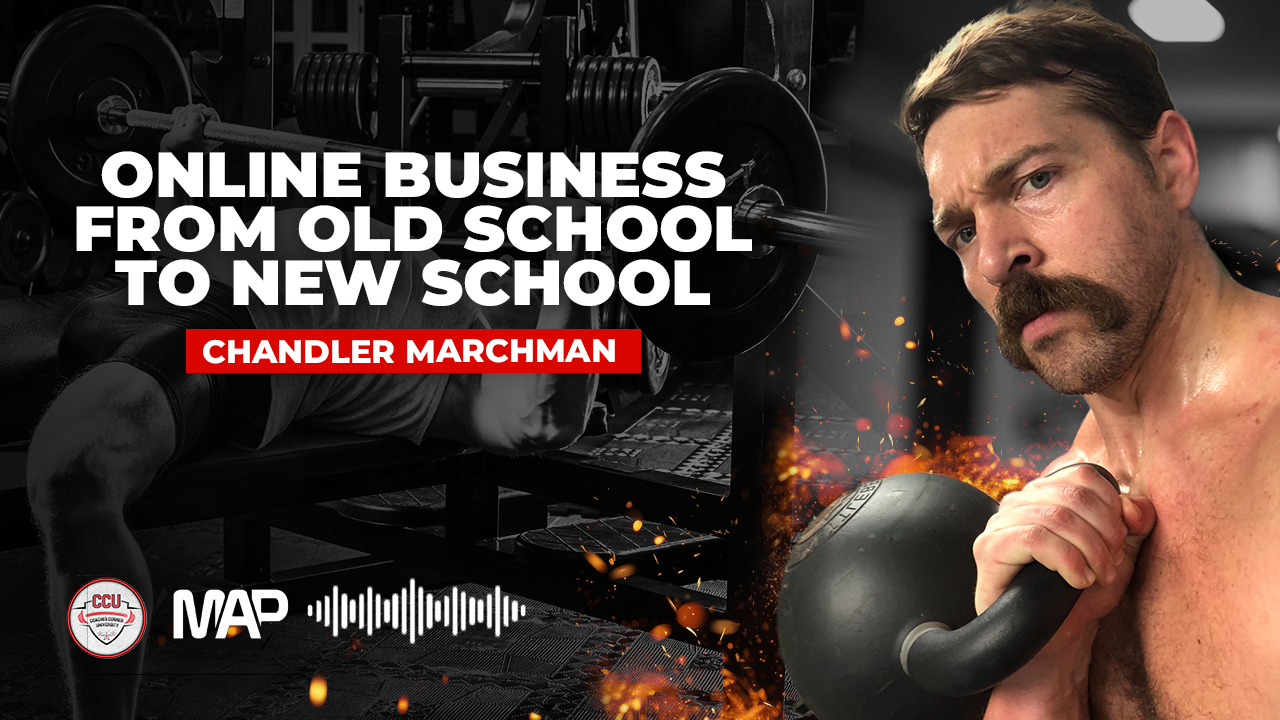
CCU Podcast - Online Business From Old School to New School with Chandler Marchman
Online Business From Old School to New School
Podcast
Today I sat down with Chandler Marchman, CEO of Marchman Strength, LLC. is a coach and mentor who helps clients and emerging fitness professionals navigate an overcrowded online fitness market with clarity and purpose. His work is rooted in his own turning point: becoming a father and realizing that the traditional, time-heavy bodybuilding lifestyle no longer aligned with the life he wanted to lead.
That shift pushed him to re-engineer his entire approach to training and nutrition. He built a streamlined system centred on efficient kettlebell MetCon training and sustainable nutrition practices—methods designed to deliver serious results without sacrificing family, career, or quality of life.
Today, he teaches men and fellow coaches how to build strong, lean, high-performing bodies while also building fuller lives. His mission is simple: empower men to look, lift, and live like the strongest version of themselves without being slaves to the process.
I've known Chandler since my days at South Florida, when I walked into the Man Cave and was greeted by a dog who wanted to rip my nutsack off, followed by one of the most authentic training environments I've ever experienced. No AC, loud music, and people who showed up to work their asses off. Fast forward over a decade, and Chandler's still at it—134,000 YouTube subscribers, 2,400 videos deep, and running a business that proves you don't need to follow anyone else's blueprint to win. This conversation pulled back the curtain on what it actually takes to build something sustainable in this industry, and if you're a coach trying to figure out your path forward, these lessons are gold.
10 Key Takeaways from Online Business from Old School to New School
Your Brand Should Push Away as Many People as It Attracts
Chandler built the Man Cave on a simple principle he learned from watching the "Anti-Gym" guy in Colorado: shock-and-awe marketing that deliberately offended people who weren't the right fit. When you're willing to be the bad guy and push away those who don't align with your values, you attract those who do. The gym was dirty and gritty, had no AC, and was called the "Man Cave," with Chandler going by "Mandler." Would it work in 2026? Probably not without backlash. Did it create a cult-like following of people who loved exactly what it was? Absolutely.
Niche Down Until It Hurts, Then Go Deeper
Chandler's subscriber-to-follower ratio isn't impressive on paper—134K subscribers from 2,400 videos comes out to about 56 subscribers per video. But here's what matters: his audience is laser-focused on exactly what he offers. As he puts it, "You can choose to go wide, or you can choose to go deep. When it comes to niche marketing, you have to go as deep into that niche as possible." His entire business is built around men, mostly fathers, who want to be the most jacked dad on the street without hating their lives in the process. That specificity is his moat.
YouTube Beats Instagram for Building Actual Business
While everyone's chasing Instagram followers, Chandler's been grinding YouTube for 12 years. His philosophy: people come to YouTube to solve problems and learn. They come to Instagram to scroll. When someone watches a 20-minute YouTube video, they're investing real time with you. How many 30-second reels does it take to build the same trust as three 20-minute videos? Chandler gets more business value per YouTube subscriber than Instagram follower, and the algorithm is far more favourable for organic growth.
Show Up Consistently or Don't Show Up At All
Chandler's one superpower? The T1000 mentality—he doesn't quit because there's no backup plan. He posts on YouTube three times per week, every single week, for over a decade. The videos don't need to be perfect. They need to solve a problem, answer a question, or inspire new training ideas. Most coaches have more talent than Chandler admits to having, but they lack the one thing that matters most: showing up when you don't feel like it.
Your Email List Is Your Real Business
Forget subscriber counts and follower vanity metrics. Chandler learned from Elliott Hulse early on that email is where you actually build a business. YouTube generates attention—the monthly check is "enough to cover a night out with my wife"—but email converts attention into revenue. If you're not building an email list and moving people off social platforms onto that list, you're treading water at best.
Know Your Client Avatar Intimately or Sell Nothing
The biggest mistake coaches make with funnels isn't structure or design—it's not knowing who the fuck they're talking to. Chandler's entire content strategy revolves around one question: What are my ideal clients struggling with, and how can I solve those problems? You can have an ugly squeeze page and a disorganized funnel, but if you're solving the right problem for the right person, you'll make money. Clean up the funnel later. Get the message right first.
Be Relatable, Not Aspirational
Chandler used to chase the shredded look. He did a 30-day rapid transformation that sold like crazy but made him miserable. Now he sits around 15-20% body fat, can see his abs with a pump, lifts impressive weight for his age, and enjoys his life. The revelation? Way more people want sustainable results they can maintain than want to look good for Instagram while hating the process. Being the pinnacle people aspire to is less valuable than being the proof that what you're selling actually works in the long term.
Every Video Needs an Objective Before You Hit Record
Is the goal more subscribers? Comments? Traffic to a landing page? You need to know before you create anything. Then, structure the content to hold attention long enough to deliver the call to action. Chandler typically saves his CTA for the end because if someone watches all the way through, they're a hot lead. But the key is that every piece of content serves a specific business objective, not just "putting out content."
Evolve With Your Audience or Get Left Behind
When COVID hit, Chandler noticed his kettlebell videos were crushing everything else. Instead of stubbornly staying "that barbell guy" or "that strongman guy," he leaned into what his audience actually needed: home workouts with minimal equipment. That shift accelerated his growth more than anything else. Look at your analytics, set aside your ego, and give people what they're asking for.
Earn Your Oxygen—Make It About Service, Not You
If Chandler could put one message on a billboard, it would be "Earn Your Oxygen." Too many "influencers" in this space make everything about themselves. Coaches who win show up daily to solve other people's problems. The more you focus on genuinely helping others build better lives, the easier it becomes to stand out in a sea of self-absorbed content creators. Walk into every situation asking how you can lift everyone up, not how you can suck all the air out of the room.
Chandler's built something real over 12 years of consistent effort—no shortcuts, no hacks, just showing up and serving his people. His business isn't built on having the most followers or the best physique. It's built on authenticity, relatability, and an unwillingness to quit when things get hard. If you're a coach wondering whether you should keep grinding or whether your approach will ever work, here's your answer: pick your lane, go deep, show up religiously, and make it about them, not you. Everything else is just noise.
Find Chandler
Website -https://marchmanstrength.com/
YouTube -http://www.youtube.com/goelitesc
Instagram -https://www.instagram.com/coachmandler/
Skool - https://www.skool.com/kettlebell-warriors
Find the Podcast

Coaches Corner PhD
Get 1-on-1 mentorship with one of the best coaches in the industry!