Discover The Latest Blogs
Stay updated with Our Informative Blog Posts
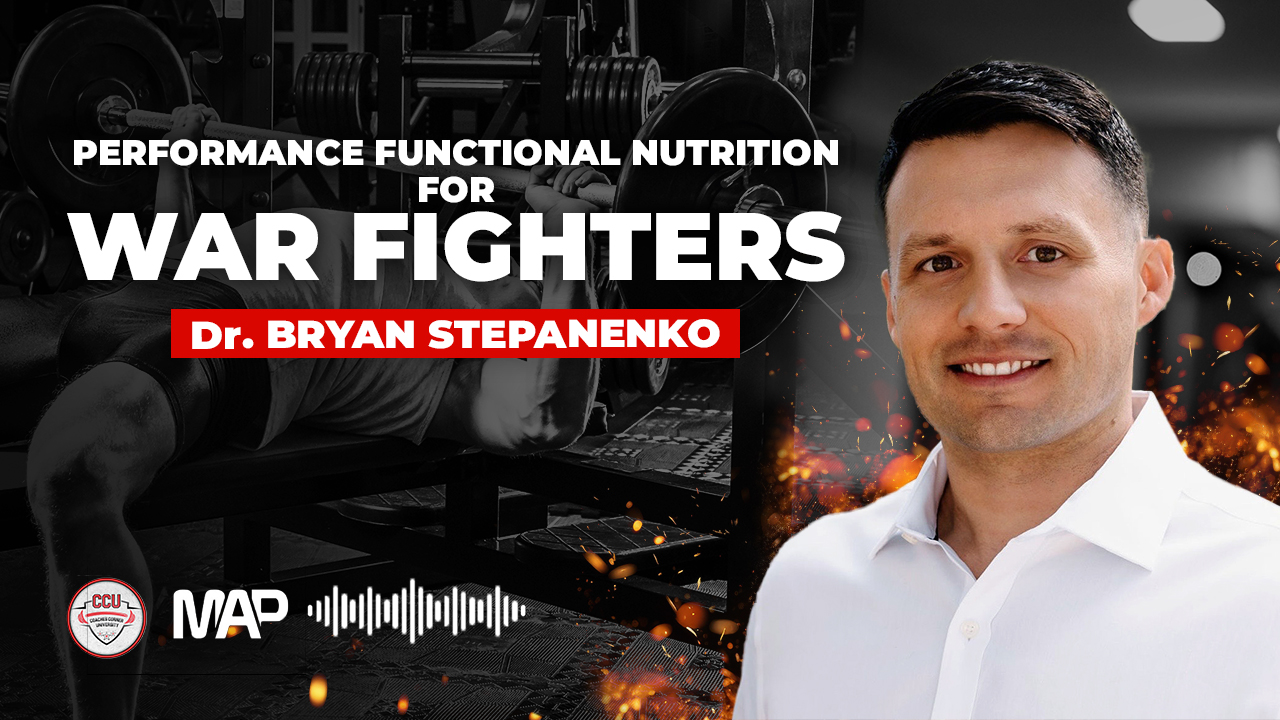
CCU Podcast - Performance Functional Nutrition for War Fighters with Dr. Bryan Stepanenko
Performance Functional Nutrition for War Fighters
Today I sat down with Dr. Bryan Stepanenko, a board-certified family physician, Functional Medicine Certified Practitioner, former Army physician, firefighter/paramedic, cancer survivor, and educator with the Institute for Functional Medicine. His career has focused on advancing functional medicine within the military, optimizing human performance, and supporting resilience in high-performing populations.
Bryan Stepanenko has lived on both sides of the medical system. Diagnosed with leukemia at three years old, hired as a firefighter paramedic at twenty, and later an active-duty Army physician for eight years, he built a career around a question most practitioners never think to ask: what if the goal isn't getting people healthy enough to return to the mission, but making them unbreakable in the first place? In this conversation, he walks through the functional medicine lens he brought into military health, the physiological fallout of exposures most coaches never account for, and why the ability to take something complex and make it stick is the most underrated skill in any professional's toolkit.
KEY QUOTE
"The more expert you are, the simpler you should be able to make it, and that's even more challenging." Dr. Bryan Stepanenko
FIVE CORE THEMES
Proactive over reactive care. The functional medicine lens doesn't wait for the wheels to fall off. Bryan describes working with populations who put tape over the check engine light to stay in the fight, and why identifying dysfunction early changes everything downstream.
The body is a system of systems. Bryan traces how blast overpressure and concussive exposure ripple through the pituitary, brainstem, vagus nerve, and gut, creating hormone dysregulation, dysautonomia, sleep apnea, and malabsorption that most practitioners treat as unrelated problems.
Control the controllables. Personal protective nutrition and personal protective lifestyle, framed with the same weight as personal protective equipment. Understand your exposures, know what they do to your physiology, then mitigate.
Mentors versus sponsors. A mentor shares perspective and helps you ask better questions and make hard decisions. A sponsor puts their name on the line and places opportunities in front of you. Bryan explains why you need both, and why the best feedback he ever received felt terrible in the moment.
Simplify and translate. The skill that earned him the nickname "Doc" as a young firefighter became the throughline of his entire career. Chunk it, distill it, make it actionable, make it memorable.
MAIN TAKE-HOME MESSAGE
Knowing more isn't the differentiator. Bryan's entire career has been built on taking complex information, distilling it into frameworks, and delivering it in a way that lands with whoever is in front of him. Combine that with a systems view of the human body and a willingness to look for early check engine lights rather than waiting for a breakdown, and you're operating on a completely different level than someone with more information.
Find Bryan
LinkedIn - allo-performance-pllc
Instagram - @alloperformance
Website - https://www.alloperformance.com/
Find the Podcast
Coaches Corner PhD
Get 1-on-1 mentorship with one of the best coaches in the industry!