Discover The Latest Blogs
Stay updated with Our Informative Blog Posts
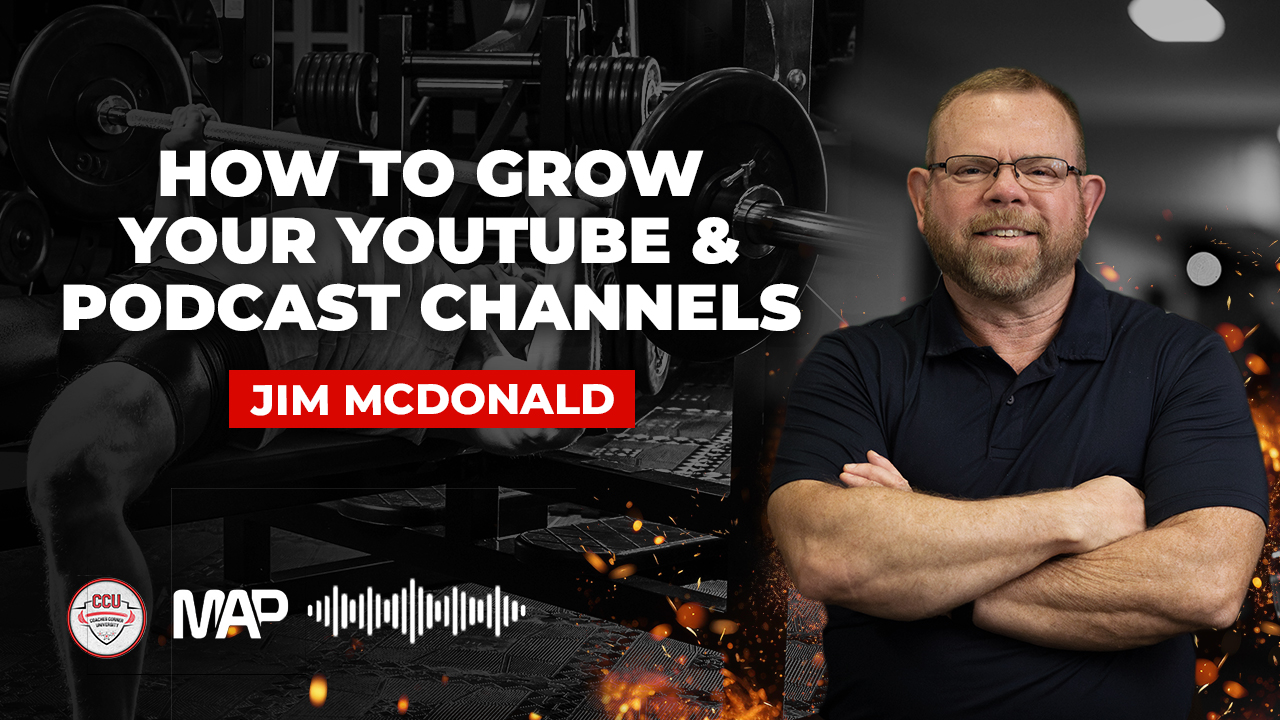
CCU Podcast - How to Grow Your YouTube and Podcast Channels Jim McDonald
How to Grow Your YouTube and Podcast Channels
Jim McDonald - How to Grow Your YouTube and Podcast Channels
Today I sat down with Jim McDonald, Co-Owner of Third Street Barbell in Sacramento, CA. Jim left the corporate world behind a couple of decades ago and became a consultant in IT and healthcare marketing. In the early 2000s, he discovered powerlifting and began to document its training and some of its greatest performances as an early YouTube fitness creator. He focused on visuals that helped the audience understand not only the technical aspects of powerlifting, but also the emotions that drive lifters to lift. Eventually, he created a chart-topping podcast along with Mike Farr just before the worldwide explosion in podcast listenership. His role at 3SB is both administrative and creative, and he’s finding the balance between those a day at a time.
10 Key Takeaways from How to Grow Your YouTube and Podcast Channels
Authenticity isn't optional—it's the foundation of everything that works
Jim was clear: if you can't be authentic on camera or mic, it doesn't work. The content creators who survive aren't the ones with the biggest followings—they're the ones who develop smaller but fiercely loyal audiences. When Jim talks about being "110% yourself" on camera, he's not talking about creating a character. He's talking about showing up as who you actually are, just with slightly more energy. The moment you start performing as someone you're not, the compliments and validation become empty because they're not actually for you.
The technical barrier is real, but it shouldn't stop you
Editing takes two to four times longer than recording. If you film for an hour, expect to spend four hours editing. That's the reality. But here's the thing—Jim started before there were tutorials, before AI tools, before any of this was easy. He learned audio editing on physical tape with razor blades. If you're waiting for the friction to disappear before you start, you'll never start. The coaches who win are the ones who either learn to outsource the friction points or accept that mastery takes time.
Content creation started as creative expression, not monetization
When Jim started shooting powerlifting content, there was no money in it. Zero. It was about recognition, creative outlet, and sharing what was happening in the gym. The podcast didn't start with a monetization strategy—it started because they wanted to create something meaningful. The money came later, after they'd already built something people cared about. If your primary motivation is financial gain rather than genuine value creation, people will smell it from a mile away.
The landscape has fundamentally changed—and it's harder now than ever
Jim was brutally honest: it's really hard to start right now. The algorithms have changed. Creators who peaked in 2016-2018 don't have the same traction anymore. Collaboration videos used to be a guaranteed audience boost—now Jim can collaborate with someone who has a massive following and pick up four followers from it. The game has changed, and the old playbooks don't work the same way. But that doesn't mean it's impossible—it just means you need to be smarter about who you're building for and why.
Know exactly who you're talking to, or you're just shouting into the void
When Jim was creating YouTube content, his audience was crystal clear: hardcore powerlifters, ages 25-45. When they moved to podcasting, they intentionally broadened that audience and changed their content approach to match. Too many coaches don't actually know who they're trying to reach. They're just creating content and hoping someone shows up. That's backwards. Figure out who you're serving first, then create content that resonates with those specific people.
Only sell shit you'd actually buy yourself
Jim's ethics around monetization are simple: if you wouldn't buy it, don't sell it. He's turned down supplement sponsorships from companies everyone was working with because he looked at the product and thought, "I wouldn't pay for this, so why would I ask anyone else to?" That standard costs you money in the short term. But it builds trust that compounds over decades. Your reputation is your moat—don't burn it for a quick paycheck.
Long-form content creates a deeper connection than any other medium
When people listen to podcasts through earbuds, it goes straight into their brains. It bypasses some of their guard. Jim experienced this firsthand when people recognized him on the street and called him by his nickname, as if they were old friends—pure parasocial connection built over hours of listening to him talk. If you want people actually to know who you are, you need to give them more than 60-second clips. You need to let them spend time with you.
A large following doesn't guarantee business success
Jim and his partners opened Third Street Barbell with a combined 200,000+ YouTube subscribers. They thought it would be easier than it has been. Even with that audience, making a gym profitable has been challenging. This is critical for every coach to understand: followers don't automatically translate to customers. Revenue doesn't automatically follow reach. Building a sustainable business requires different skills than building an audience.
Stop trying to be someone else—no one can compete with you being you
The content creators who are taking "arch positions" on things and making that their whole persona aren't standing out anymore because everyone's doing it. The fear appeals, the seed oils discourse, all of it—it's white noise. What cuts through is genuine personality and perspective that can't be replicated. Jim's been himself for 18 years, and that consistency is what built everything he has. In an age where AI can replicate expertise, your authentic experience is the only thing that can't be copied.
The future belongs to niche creators with loyal audiences
Jim's prediction: the authentic creators who develop smaller-than-expected but very loyal audiences are the ones who are going to survive. The broad-based, huge-audience play is getting harder. But that's actually good news for coaches who are building something real. You don't need 100,000 followers to make really good money. If your average client pays $300/month and your followers actually know who you are, you need far fewer people than you think to build a six-figure coaching business.
The Long Game Always Wins
What Jim's journey reinforces for me is something I've learned the hard way: there are no shortcuts to building something real. Years of showing up, creating content, evolving with the platforms, and maintaining authenticity through all of it—that's what it takes to build a legacy in this industry.
Find Jim
Website:thirdstreetbarbell.com
Everywhere: @thejimmcd
Instagram: @thirdstreetbb / @50percentfactd
Find the Podcast

Coaches Corner PhD
Get 1-on-1 mentorship with one of the best coaches in the industry!