Discover The Latest Blogs
Stay updated with Our Informative Blog Posts
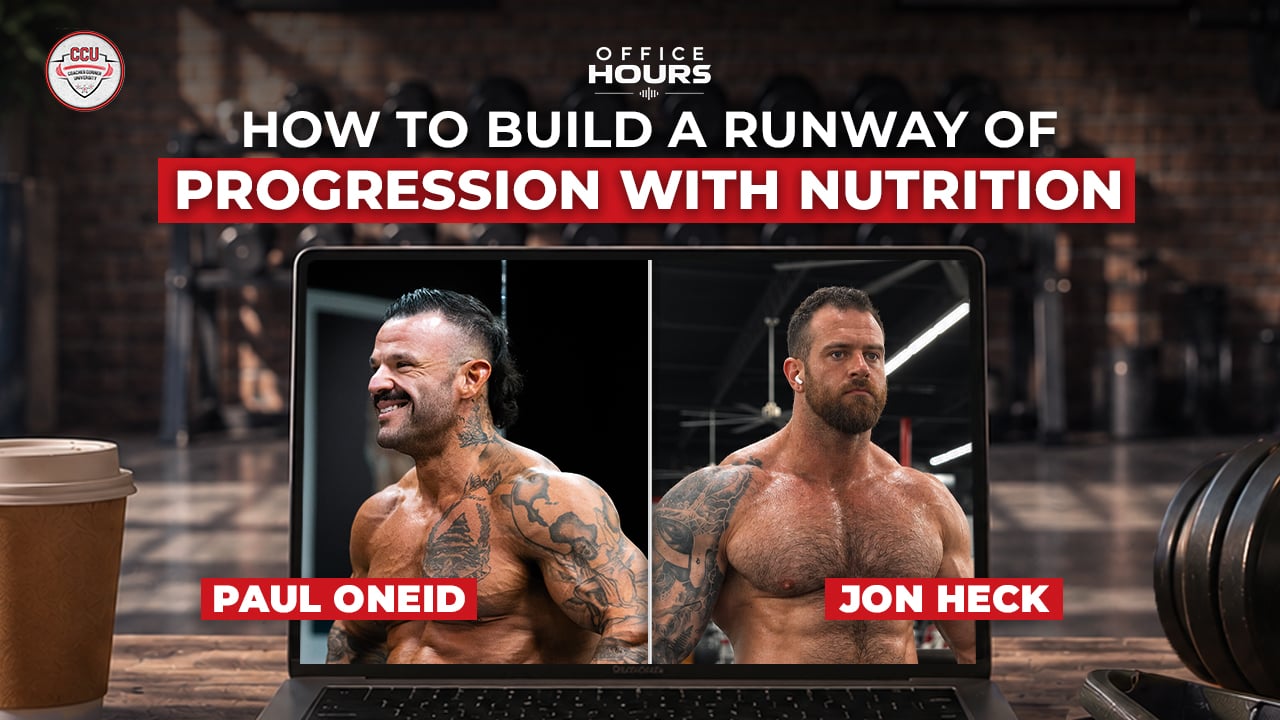
CCU Podcast - Paul Oneid and Jon Heck - How to Build a Runway of Progression with Nutrition
How to Build a Runway of Progression with Nutrition
Paul Oneid and Jon Heck
This week, Jon Heck, Owner of Hammer and Chisel Performance is back on the podcast. Jon played football at the University of North Carolina, where he was a 4-year starter and a 2x All-ACC selection at offensive tackle for the Tar Heels. He graduated with a degree in Exercise Sport Science and immediately received certifications as a nutritionist and strength and conditioning coach. He began his career as a strength and conditioning coach. He spent nearly a decade working in football strength and conditioning at the NFL and Division I college level, as well as in the private sector at a combine prep facility. He competed at a high level in powerlifting and strongman and has always been passionate about strength sports. A big part of his educational background is in nutrition, and that has been a significant component of his coaching in football and the private sector.
Key Quote “One of the most crucial variables to success in a fat loss diet is not regressing in training.” Jon Heck 5 Core Themes
Main Take-Home Message Nutrition coaching is less about finding the perfect plan and more about building the right progression for the person in front of you. As Jon shows, the X’s and O’s are simple. The skill is reading the client’s psychology, choosing the right level of intervention, and making clear trade-offs so they can stick with it long enough to see results. Every nutrition decision has a cost, and a coach’s job is to name it, test it, and pivot from there.
Website - hammerchiselperformance.com IG - @what_the_heck71 YouTube - @JonHeckPerformance Find the Podcast |
Keep Raising the Bar, Paul Oneid MS, MS, CSCS |
Coaches Corner PhD
Get 1-on-1 mentorship with one of the best coaches in the industry!